
GCSE Maths (Edexcel)
435 videos | 33 hours
Please subscribe to watch this video.
This, and all other videos, are included in our premium subscriptions.
Premium accounts get access to all videos.
Enable autoplay to keep watching
Your browser is blocking videos from playing automatically. To turn it back on:
Safari (Mac): Click the Safari menu item in the top bar, then Settings → Websites → Auto-Play, then set Auto-Play to Allow All Auto-Play for the current website.
Safari (iPhone/iPad): open the Settings app, then Apps → Safari → Auto-Play, and select Allow All Auto-Play.
Error Intervals
- Error intervals are used to visualize the range of values that a number could have been before it was rounded
- The lower bound is the smallest value that could be rounded up to achieve the estimated value
- The upper bound is the smallest value that would round up to achieve a number greater than the estimated value
- To calculate the lower bound, subtract half of the degree of accuracy from the number
- To calculate the upper bound, add half of the degree of accuracy to the number
- The original number could have been anything between the lower and upper bounds
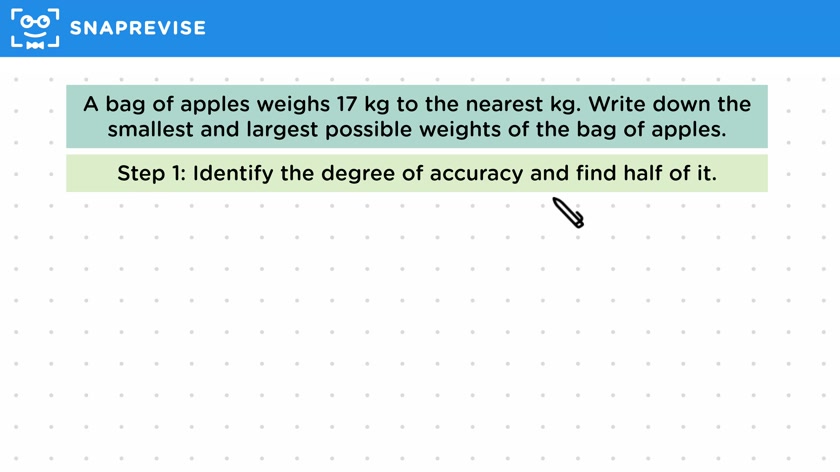
- An example is given with a bag of apples weighing 17 kilograms to the nearest kilogram
- Another example is given with a number rounded to three significant figures, resulting in 4.19
- The error interval for the number is between 4.185 and 4.195
Please subscribe to access these revision notes.
This, and all other video notes, are included in our premium subscriptions.
Premium accounts get access to all videos and revision notes.
264
questions for Number
39
questions for Measures and accuracy