
GCSE Maths (Edexcel)
435 videos | 33 hours
Please subscribe to watch this video.
This, and all other videos, are included in our premium subscriptions.
Premium accounts get access to all videos.
Enable autoplay to keep watching
Your browser is blocking videos from playing automatically. To turn it back on:
Safari (Mac): Click the Safari menu item in the top bar, then Settings → Websites → Auto-Play, then set Auto-Play to Allow All Auto-Play for the current website.
Safari (iPhone/iPad): open the Settings app, then Apps → Safari → Auto-Play, and select Allow All Auto-Play.
Algebra
Graphs
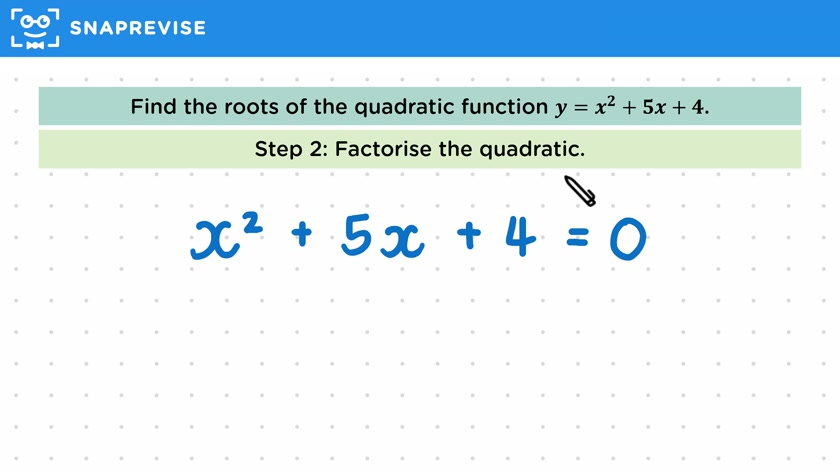
Finding Roots of a Quadratic Graph
4:54
Quadratic Graph Calculations
Spec
A11
- The roots of a quadratic graph are where the graph cuts the x axis
- The number of roots can vary depending on the position of the graph
- The roots represent the solutions to the quadratic equation created by setting y equal to zero
- The solutions can be found by factorizing the quadratic equation
- Factorizing the quadratic equation involves finding two numbers that multiply together to give the constant term and add together to give the coefficient of x
- The factorized quadratic equation can be used to form and solve two linear equations for x
- The solutions to the linear equations are the roots of the quadratic equation
- The roots can be used to draw a sketch of the quadratic function
- Depending on the original quadratic function, there may be one repeated solution or no solutions at all.
Please subscribe to access these revision notes.
This, and all other video notes, are included in our premium subscriptions.
Premium accounts get access to all videos and revision notes.
310
questions for Algebra
95
questions for Graphs
Report an Issue
Spotted something wrong? Let us know and we'll take a look.