
GCSE Maths (Edexcel)
435 videos | 33 hours
Please subscribe to watch this video.
This, and all other videos, are included in our premium subscriptions.
Premium accounts get access to all videos.
Enable autoplay to keep watching
Your browser is blocking videos from playing automatically. To turn it back on:
Safari (Mac): Click the Safari menu item in the top bar, then Settings → Websites → Auto-Play, then set Auto-Play to Allow All Auto-Play for the current website.
Safari (iPhone/iPad): open the Settings app, then Apps → Safari → Auto-Play, and select Allow All Auto-Play.
Mean
- The mean of a set of quantitative data is a measure of central tendency
- The mean is calculated by summing all the data values and dividing by the number of data values
- The mean can only be calculated for quantitative data, not categories or names
- The mean is not necessarily equal to any of the individual data values
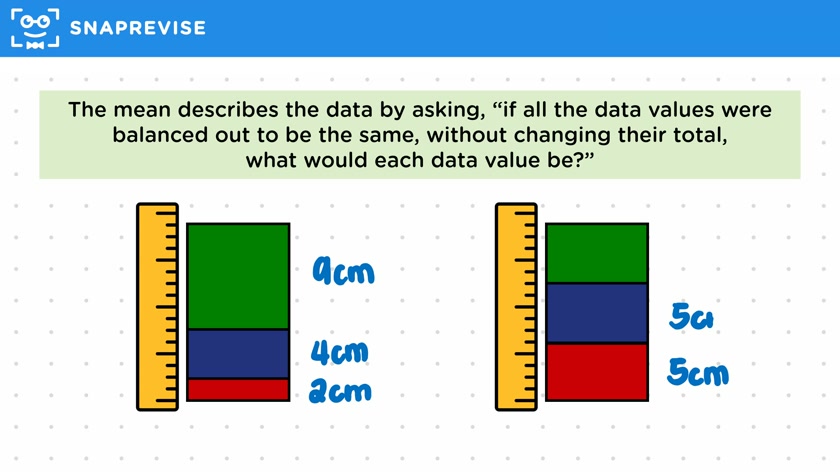
- The mean describes what each data value would be if they were all balanced out to be the same without changing their total
- The mean can be calculated for continuous or discrete data sets
- To calculate the mean, count the number of data values, find the sum of the data values, and divide the sum by the number of data values
- In the example given, the mean distance the paper airplanes flew for is 2.5875 meters
Please subscribe to access these revision notes.
This, and all other video notes, are included in our premium subscriptions.
Premium accounts get access to all videos and revision notes.
116
questions for Statistics
116
questions for Statistics