
GCSE Maths (Edexcel)
435 videos | 33 hours
Please subscribe to watch this video.
This, and all other videos, are included in our premium subscriptions.
Premium accounts get access to all videos.
Enable autoplay to keep watching
Your browser is blocking videos from playing automatically. To turn it back on:
Safari (Mac): Click the Safari menu item in the top bar, then Settings → Websites → Auto-Play, then set Auto-Play to Allow All Auto-Play for the current website.
Safari (iPhone/iPad): open the Settings app, then Apps → Safari → Auto-Play, and select Allow All Auto-Play.
Multiplying Limits of Accuracy
- When multiplying two measurements, the limits of accuracy for the result depend on the bounds of the original measurements.
- The smallest possible area is obtained by multiplying the two shortest possible lengths, while the maximum possible area is obtained by multiplying the largest possible lengths.
- To find the lower bound of the result, multiply the lower bounds of the original measurements. To find the upper bound, multiply the upper bounds.
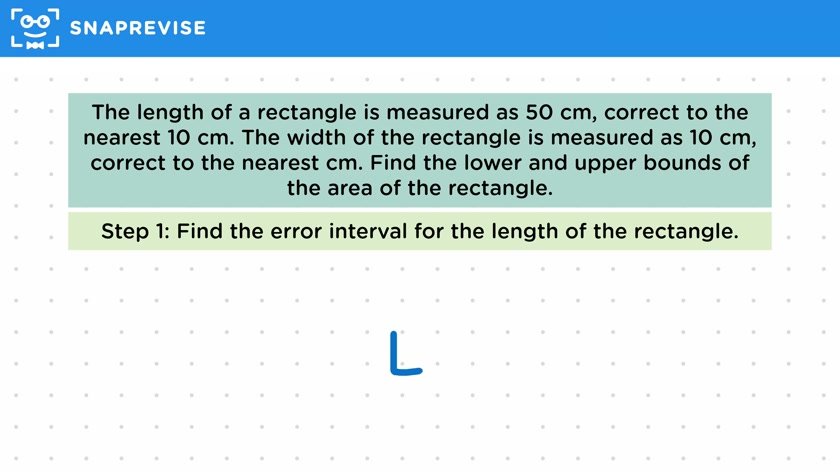
- An example is given where the length of a rectangle is measured to the nearest 10 centimeters and the width is measured to the nearest centimeter. The lower and upper bounds of the area of the rectangle are calculated.
- The lower bound of the area is obtained by multiplying the lower bounds of the length and width, while the upper bound is obtained by multiplying the upper bounds.
- It is important to use precise equipment when taking measurements to minimize the difference between the lower and upper bounds.
Please subscribe to access these revision notes.
This, and all other video notes, are included in our premium subscriptions.
Premium accounts get access to all videos and revision notes.
264
questions for Number
39
questions for Measures and accuracy