
GCSE Maths (Edexcel)
435 videos | 33 hours
Please subscribe to watch this video.
This, and all other videos, are included in our premium subscriptions.
Premium accounts get access to all videos.
Enable autoplay to keep watching
Your browser is blocking videos from playing automatically. To turn it back on:
Safari (Mac): Click the Safari menu item in the top bar, then Settings → Websites → Auto-Play, then set Auto-Play to Allow All Auto-Play for the current website.
Safari (iPhone/iPad): open the Settings app, then Apps → Safari → Auto-Play, and select Allow All Auto-Play.
Standard Form
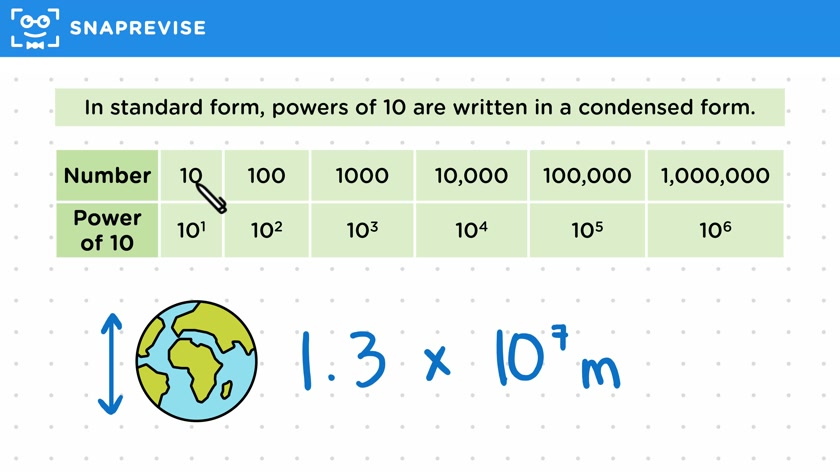
- Standard form is a way of writing very large and very small numbers
- Standard form is written as A times 10 to the power of n, where A is between 1 and 10
- Standard form is also known as standard index form or scientific notation
- To recognize if a number is in standard form, the number being multiplied by the power of 10 must be between 1 and 10 (excluding 10)
- Powers of 10 in standard form are written in a condensed form and indicate how many zeros there are after the one in the original number
- Standard form is useful for writing very large numbers quickly and easily
- Standard form can also be used for very small numbers by using negative powers of 10
- Negative powers of 10 are equal to 1 divided by the positive power
- Any number to the power of 0 equals 1
- Writing very small numbers in standard form is easier than writing them as decimals
- Practice and experience will help in understanding the scales represented by different powers of ten in standard form.
Please subscribe to access these revision notes.
This, and all other video notes, are included in our premium subscriptions.
Premium accounts get access to all videos and revision notes.
264
questions for Number
210
questions for Structure and calculation