
GCSE Maths (Edexcel)
435 videos | 33 hours
Please subscribe to watch this video.
This, and all other videos, are included in our premium subscriptions.
Premium accounts get access to all videos.
Enable autoplay to keep watching
Your browser is blocking videos from playing automatically. To turn it back on:
Safari (Mac): Click the Safari menu item in the top bar, then Settings → Websites → Auto-Play, then set Auto-Play to Allow All Auto-Play for the current website.
Safari (iPhone/iPad): open the Settings app, then Apps → Safari → Auto-Play, and select Allow All Auto-Play.
Theoretical Probability
- The theoretical probability of an event is determined by the number of outcomes that satisfy the event's criteria.
- The probability of an event is equal to the number of successful outcomes over the total number of outcomes.
- Examples where all outcomes do not have the same chance of occurring include rolling a loaded die or a particular football team winning a match.
- To calculate the probability of an event, determine the number of possible outcomes and the number of successful outcomes, then use the formula: Probability = Number of successful outcomes / Total number of outcomes.
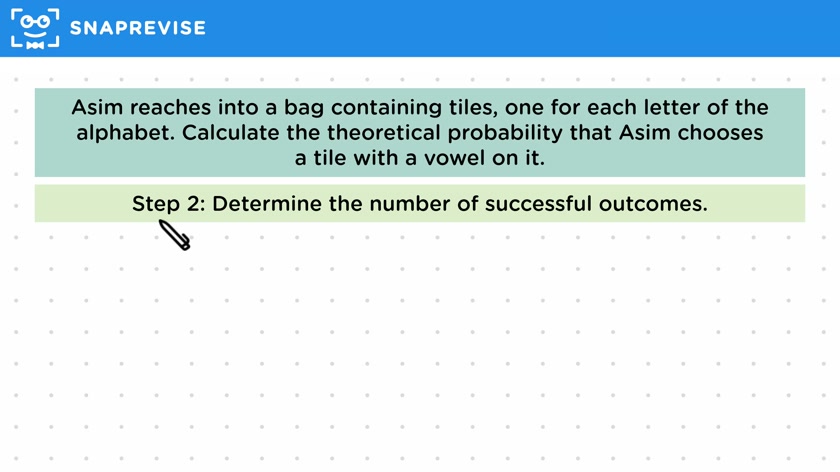
- Example 1: The probability of choosing a tile with a vowel from a bag containing tiles for each letter of the alphabet is 5/26 or 19.23%.
- Example 2: The probability of the released item from a broken vending machine being a can of cola is 6/12 or 50%.
Please subscribe to access these revision notes.
This, and all other video notes, are included in our premium subscriptions.
Premium accounts get access to all videos and revision notes.
68
questions for Probability
68
questions for Probability