
GCSE Computer Science (AQA)
Topic Summaries
COMPUTER SYSTEMS: Network topologies
Star topology
- Network topology refers to how devices are arranged and connected to each other in a network. Note that topology refers only to the physical layout, not the network type (i.e. any topology can be peer-to-peer or client-server).
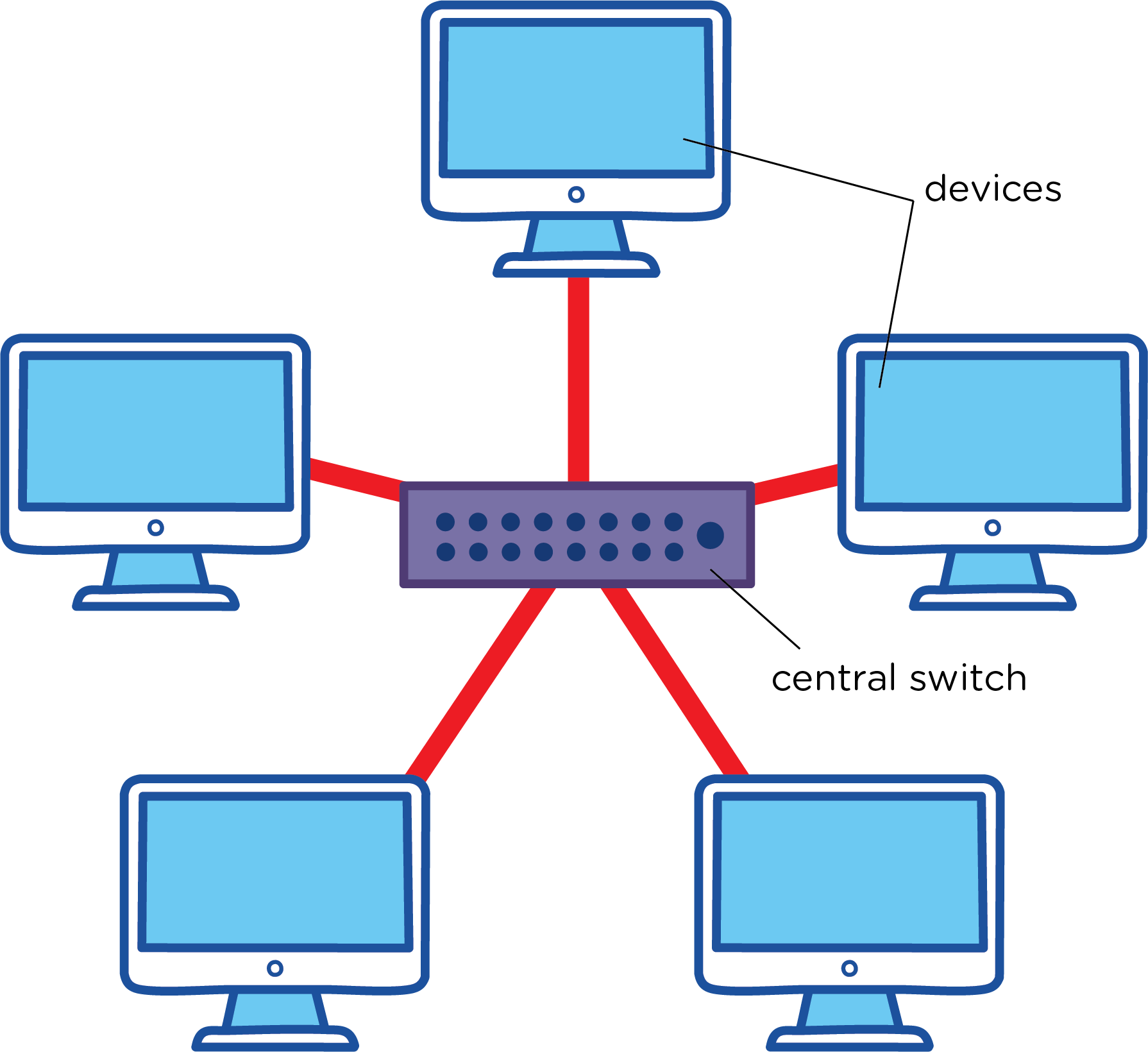
- A star topology is where devices connect indirectly through a central switch or hub. The layout looks like a star with connections radiating from the center.
| Advantages | Disadvantages |
|
|
Unlock Star topology
Sign up to unlock the rest of this topic — plus every other topic, video, flashcard set and eBook guide in your SnapRevise Digital subscription.
Cancel anytime — instant access the moment you sign up.
Report an Issue
Spotted something wrong? Let us know and we'll take a look.