
GCSE History (Pearson IGCSE)
Topic Summaries
Industrial medicine
Industrial doctors and medical professionals
- Medical professionals during this period increasingly focused on understanding the links between environment, disease, and public health due to urbanisation and overcrowding. They also relied more on observation, statistics, and experimentation rather than tradition.
- Surgeons improved techniques through better understandings of anatomy, anaesthesia, and antiseptics.
- The Medical Act of 1858 resulted in higher standards of training in medical schools, hospital-based learning, and formal qualifications from universities.
- Both hospital procedures and medical education became more structured, reflecting a trend toward professionalisation and standardisation in medicine.
- Public health reformers worked with governments to improve water supply and sewage systems, particularly in response to cholera outbreaks.
- There was a shift in focus from individual treatment to population-wide prevention methods.
Profile: Edward Jenner
- Jenner was an English doctor who developed the world’s first successful vaccination.
- Jenner was a surgeon apprentice from age 13-19 and then went on to study in London with John Hunter who encouraged him to conduct his own experiments and develop hypotheses.
- In 1796, Jenner discovered that exposure to cowpox could protect people from smallpox, testing his theory through experimentation and publishing his findings in 1798.
- Vaccination represented a major new approach to prevention rather than cure, as vaccination was safer and more effective than inoculation.
- Although his ideas faced opposition, vaccination became increasingly widespread and was made compulsory in Britain in 1853.
- Jenner’s work laid the foundations for modern immunisation programmes.
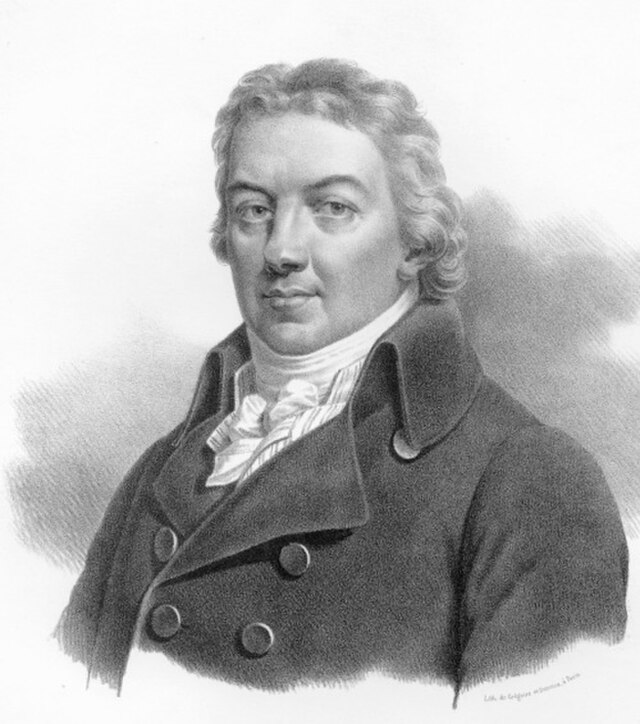
Edward Jenner
(b. 1749 d. 1823)
Profile: Louis Pasteur
- Pasteur was a French chemist who developed germ theory which proved that microorganisms cause disease, and disproved the theory of spontaneous generation. He also developed ideas on vaccination and pasteurisation.
- Vaccination:
- In 1880, Pasteur was investigating chicken cholera. His assistant, Charles Chamberlain, accidentally left the petri dish out for four days, and when Pasteur tested it on animals, the chickens never died. This led to the development of the chicken cholera vaccine.
- Pasteur later developed vaccines for anthrax and rabies, building on the work of Edward Jenner.
- However, his ideas were not immediately accepted. Most doctors did not believe microscopic germs could harm a human. Germ theory was first considered by vets in the UK before it became consensus among doctors.
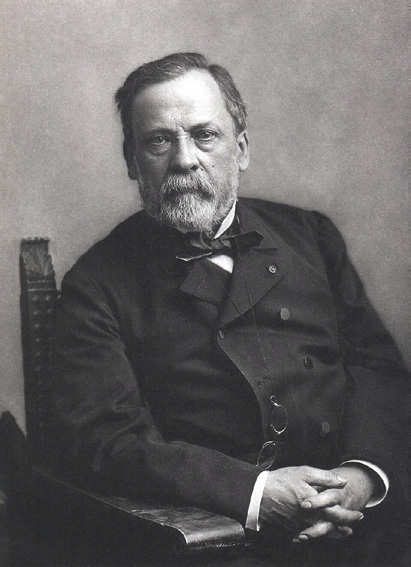
Louis Pasteur (b. 1822 d. 1895)
- Pasteurisation:
- From 1857 to 1860, he investigated why milk and wine went sour. He discovered that if air was kept out of the swan’s neck flask, then the liquid would not sour.
- Pasteur identified the microbe responsible for souring wine and showed that heating it to a specific temperature would kill the microbes and so it would not go off. He thus correctly concluded that bacteria and germs were responsible for souring milk and wine.
- Pasteur’s work would later inspire Joseph Lister in developing antiseptics.
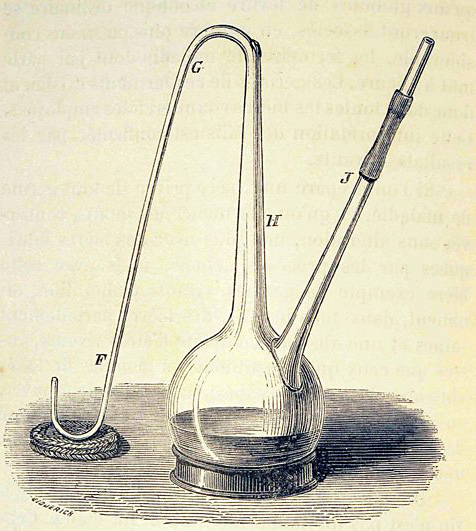
A sketch of a ‘swan-neck’ flask used by Pasteur in his experiments to disprove spontaneous generation
Profile: Joseph Lister
- Lister was a surgeon and pathologist who studied bacteria and developed antiseptic techniques to make surgery safer.
- Lister believed that infections only happened when the skin was broken.
- When seeing a patient with a fractured leg, he decided to soak the leg in carbolic acid instead of amputating, and he found the boy’s leg healed well.
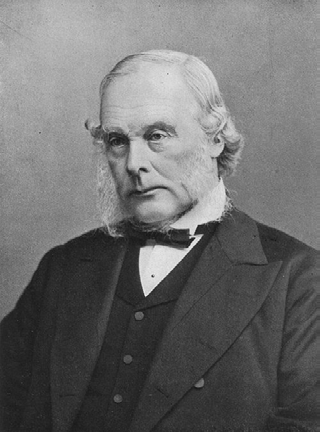
Joseph Lister (b. 1827 d. 1912)
Profile: John Snow
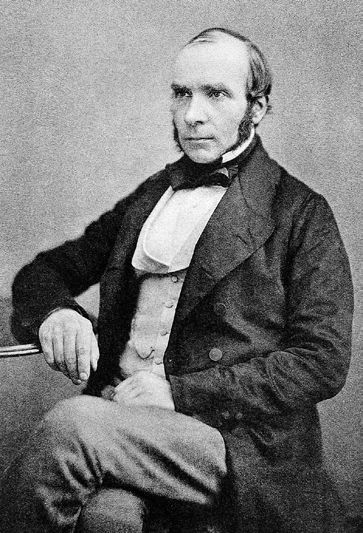
John Snow (b. 1813 d. 1858)
- Snow theorised that disease was not caused by miasma, but dirty water.
- He created a map showing cholera deaths in his local area, noting that they all seemed to be centred around the Broad Street Pump. He removed the pump, and quickly, deaths decreased.
- Snow presented his findings to parliament, proving that cholera was spread by contaminated water, and suggesting a new sewer system be developed to prevent spread.
- Overall, Snow had an immediate impact on the Broad Street area, but his impact outside of this area was limited, and the significance of his epidemiology (studying the spread of a disease) would not be understood until later.
- His work wasn’t initially taken seriously due to a lack of germ theory proof. The Great Stink later motivated Parliament to act and build a sewage system, acknowledging Snow’s findings.
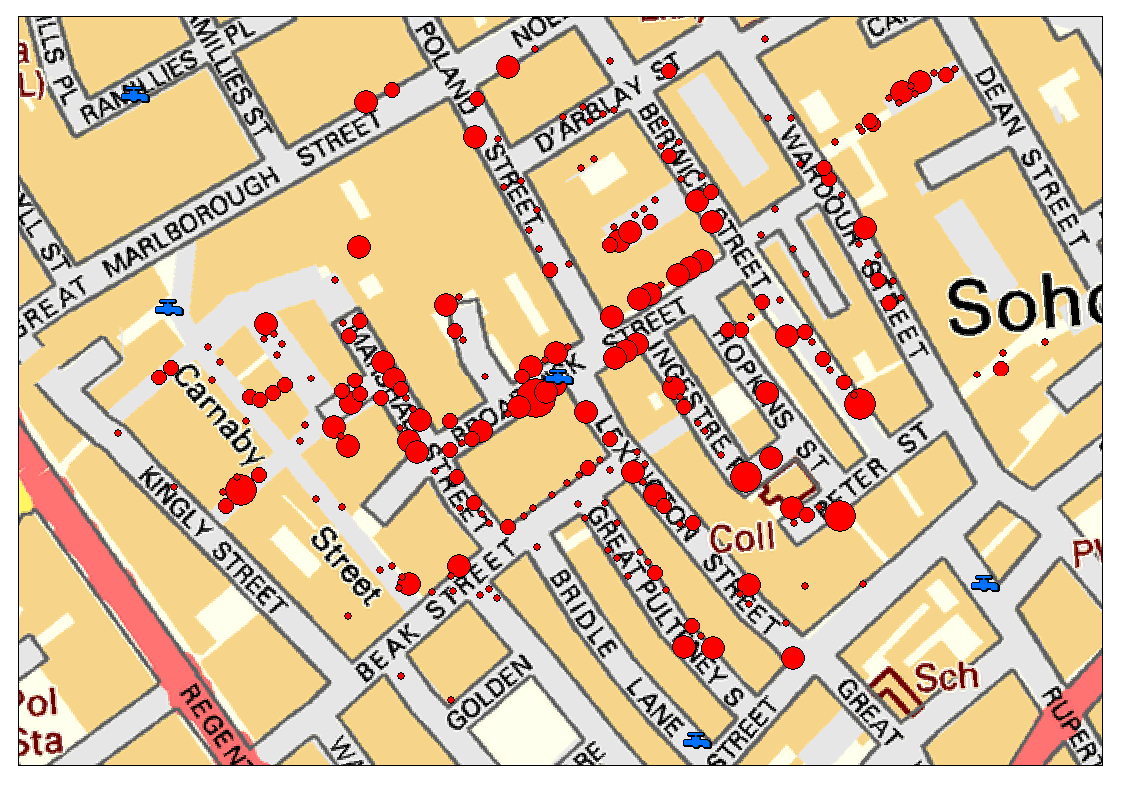
A map of incidence of cholera clustered around the Broad Street water pump
Profile: Robert Koch
- Koch was a German microbiologist and expanded Pasteur’s germ theory and the field of bacteriology. He identified bacteria that caused cholera, anthrax, and TB.
- Pasteur and Koch were rivals competing for the next breakthrough in vaccinations. There were several factors that contributed to this:
- War: the rivalry between the two increased after France lost a war against Germany. Armies could lose more men to illness, which meant racing to find cures.
- Individuality: Pasteur was a hard-working scientist despite losing his daughter to typhoid and having a stroke. Koch was also a rigorous scientist who pushed to discover more each time.
- Communication: after making his discovery, Pasteur demonstrated his vaccine in front of audiences in France. News was quickly spread through the electric telegraph
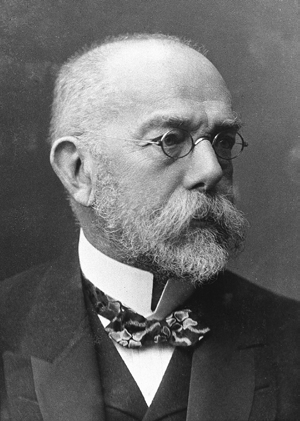
Robert Koch (b. 1843 d. 1910)
Profile: Paul Ehrlich
- Ehrlich was a German scientist developed the idea of ‘magic bullets’ – chemicals targeting specific diseasecausing microbes without harming the rest of the body.
- In 1909, Ehrlich created Salvarsan 606, the first effective treatment for syphilis, which had previously been widespread and often fatal. Ehrlich worked with his colleague Sahachiro Hata tested over 600 compounds before finding a successful one.
- His work marked a major change in medicine away from general remedies towards targeted, scientific drugs and chemotherapy
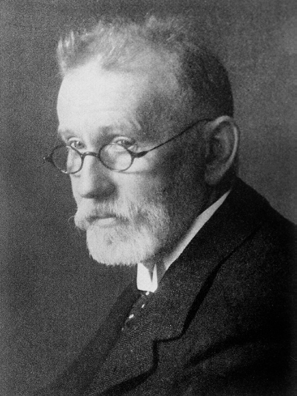
Paul Ehrlich (b. 1854 d. 1915)
Profile: Elizabeth Garrett Anderson
- Anderson was a pioneer for women in medicine during the 19th century. She faced significant legal and social barriers, as women were not allowed to qualify as doctors in the UK.
- Anderson overcame these obstacles by qualifying through the Society of Apothecaries in 1865. She became the first woman to be officially recognised as a doctor in Britain.
- She founded the New Hospital for Women in London, staffed entirely by women who would treat female patients.
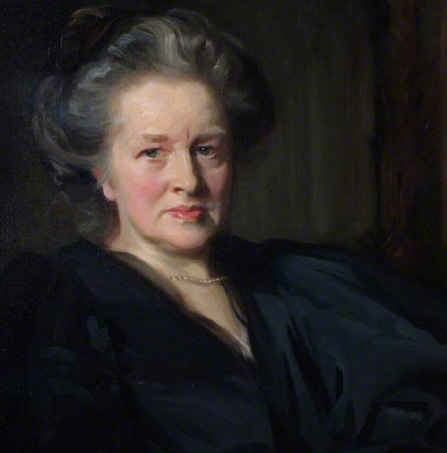
Elizabeth Garrett Anderson (b. 1836 d. 1917)
Unlock Industrial doctors and medical professionals
Sign up to unlock the rest of this topic — plus every other topic, video, flashcard set and eBook guide in your SnapRevise Digital subscription.
Cancel anytime — instant access the moment you sign up.
Report an Issue
Spotted something wrong? Let us know and we'll take a look.