

Topic Summaries
Features of industrial Britain
GCSE
>
History
>
AQA
>
GCSE History: Medicine and Health in Britain (1000-Present) Topic Summaries
>
Industrial medicine
>
Features of industrial Britain
Medieval medicine
Renaissance medicine
Industrial medicine
Modern medicine
- - Features of modern Britain
- - Modern explanations for illness
- - Modern cures and preventions
- - Medical technology in the modern era
- - Modern doctors and medical professionals
- - Modern public health
- - Innovations from WWI
- - Trench warfare
- - Injuries and illnesses from the trenches
- - Treatment in the trenches
Medieval medicine
Renaissance medicine
Industrial medicine
Modern medicine
- - Features of modern Britain
- - Modern explanations for illness
- - Modern cures and preventions
- - Medical technology in the modern era
- - Modern doctors and medical professionals
- - Modern public health
- - Innovations from WWI
- - Trench warfare
- - Injuries and illnesses from the trenches
- - Treatment in the trenches
- The Industrial Revolution took place in the 18th and 19th centuries. The population doubled during this time and technology rapidly advanced.
- Industrialisation led to rapid population growth in towns and cities such as Manchester, Birmingham, and Leeds. Migration from rural areas was common since factory work offered regular wages, and agricultural mechanisation reduced rural employment. However, this meant cities expanded too quickly for infrastructure to cope.
- Workers lived in overcrowded, poorly built housing (often back-toback terraced houses that lacked ventilation and running water). This overcrowding increased the spread of disease.
- Towns grew very quickly in the 1800s as people flocked to new jobs in factories. For example, the population of Sheffield in 1750 was 12,000, and by 1850 this had grown to 150,000.
- Few houses had toilets; some had buckets in the corner of their room that would be emptied into the street or stored until there was enough to sell as manure. Street toilets were a deep hole with a wooden shed over it, shared with many families.
- Water came from pumps that connected to filthy rivers and ponds.
- Diets were poor, especially for the working class. Food was often adulterated (e.g. chalk in flour, water in milk), and malnutrition weakened immune systems.
- Water was often taken from rivers contaminated with sewage, or from shared water pumps which increased infection risk.
- Human waste was stored in cesspits which frequently overflowed. Industrial waste from factories also began to further pollute water sources.
- Early nineteenthcentury governments believed in laissez-faire (non-interventionist) attitudes, so responsibility for health was seen as an individual issue.
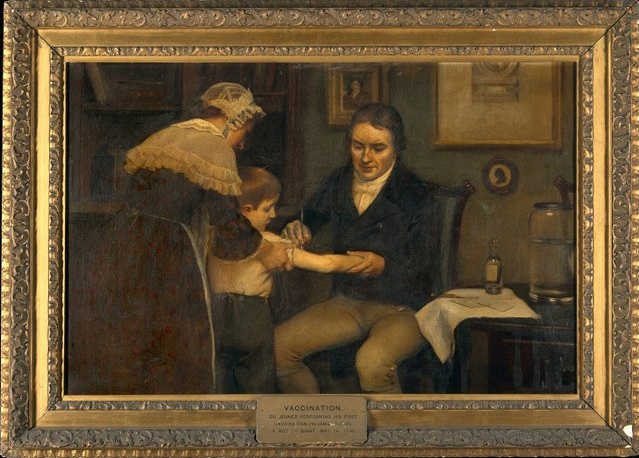
A 1910 painting by Ernest Board of Edward Jenner performing his first vaccination on 8-year-old James Phipps in 1796
Unlock Features of industrial Britain
Subscribe to SnapRevise+ to get immediate access to the rest of this resource.
Premium accounts get immediate access to this resource.