
GCSE History (Edexcel)
Topic Summaries
Medieval medicine
Medieval explanations for illness
- Religious explanations:
- There was a strong belief that sickness came from God as a punishment, and so curing an illness was perceived as a challenge to God. Instead, experiencing illness was a way to cleanse the soul.
- The Church dominated education and medical training, so people believed what priests told them about illness. Dissections were discouraged by the Church, so understanding of anatomy was poor.
- Miasma:
- People believed that bad air (miasma, Greek word for pollution) from rotting matter and dirt caused disease, since they had no knowledge of bacteria.
- This idea came from Hippocrates’ book Airs, Waters, and Places.
- Astrology:
- Some believed the alignment of planets and stars (astrology) had an effect on illness, so physicians consulted star charts for diagnoses.
- Although disliked by the Church, astrology and soothsayers gained popularity in the Black Death as people were desperate for answers.
- The Four Humours:
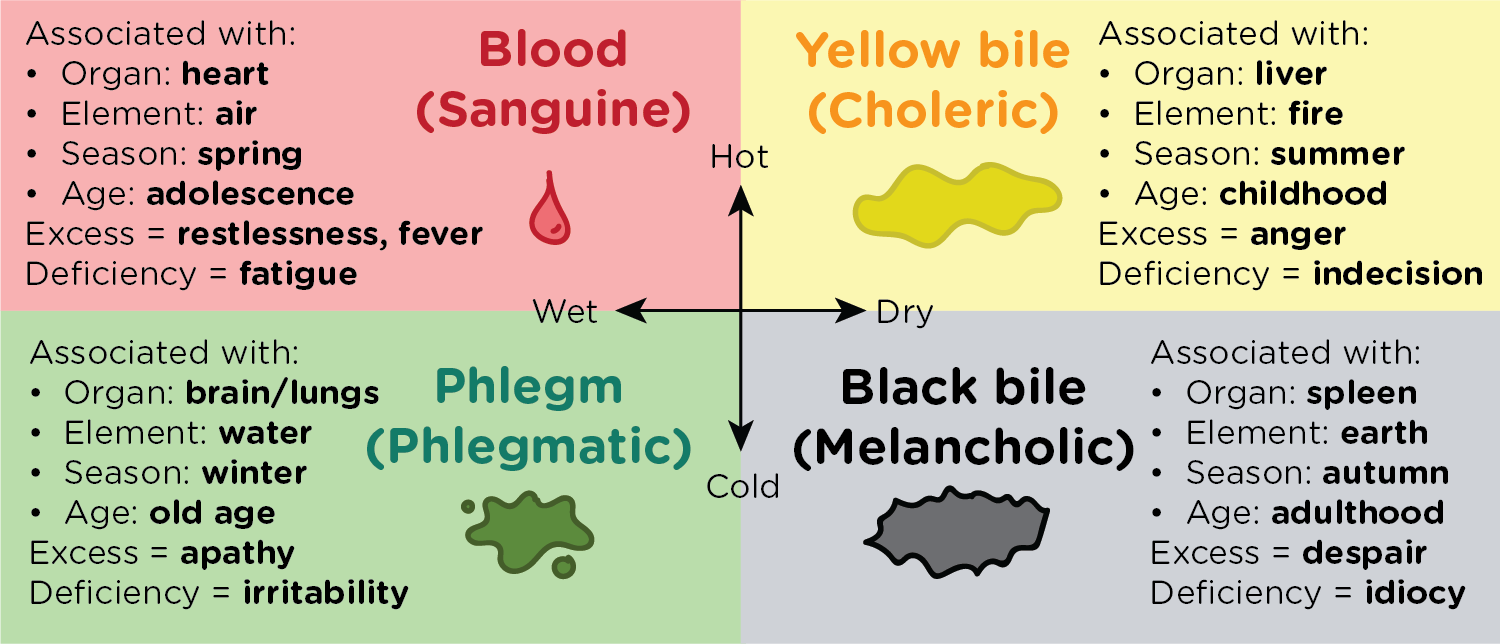
- The theory that the human body was made up of four elements: blood, black bile, yellow bile, and phlegm.
- It was believed that a person became ill when one of the humours was out of balance, and it was the doctor’s job to rebalance these.
- The theory was created by Hippocrates and later developed by Galen with the Theory of Opposites. Galen suggested treating an illness with an excess of one humour with its opposite (e.g. eating hot peppers to treat an excess of cold phlegm).
- The humours were linked to seasons, elements, and phases of life.
Unlock Medieval explanations for illness
Sign up to unlock the rest of this topic — plus every other topic, video, flashcard set and eBook guide in your SnapRevise Digital subscription.
Cancel anytime — instant access the moment you sign up.
Report an Issue
Spotted something wrong? Let us know and we'll take a look.