
GCSE History (Edexcel)
Topic Summaries
Modern medicine
Modern doctors and medical professionals
- Doctors have increasingly specialised, reflecting the growing complexity of medical knowledge and technology.
- The discovery of antibiotics, vaccines, and advanced surgical methods drastically reduced mortality from infectious diseases.
- Medical practice has become increasingly evidence-based, relying on clinical trials, standardised protocols, and peer-reviewed research.
- Public health and global health initiatives became central, with doctors playing key roles in outbreak response and health equity.
- Advances in diagnostic tools, such as imaging, genetics, and molecular testing, have transformed patient care and early detection.
- Recent innovations, including mRNA vaccines, genomics, and AI, are rapidly reshaping how diseases are diagnosed, treated, and prevented.
Profile: Karl Landsteiner
- Landsteiner discovered the existence of different blood groups and Rh factors in 1901.
- He identified that incompatible blood caused dangerous reactions.
- This discovery made blood transfusions far safer and led to the development of blood banks and blood donations.
- He also discovered the polio virus and was involved in many key medical research projects throughout the 20th century.
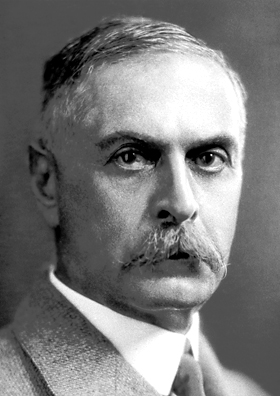
Karl Landsteiner (b. 1868 d. 1943)
Profile: Marie Curie
- Marie Curie was a pioneering scientist who discovered radioactivity and was the first person to win Nobel Prizes in both Physics and Chemistry.
- She developed the use of X-rays for diagnosis and equip mobile X-ray units for use on WWI battlefields.
- Radiation therapy became important in cancer treatment.
- She died in 1934 from aplastic anaemia, a condition caused by prolonged exposure to high levels of radiation during her research.
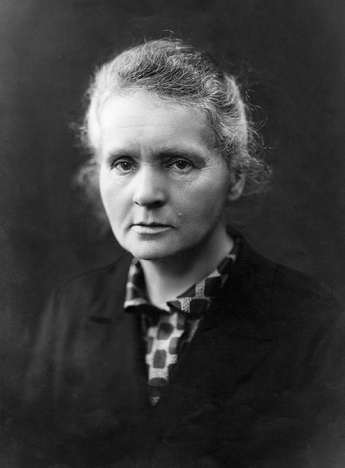
Marie Curie (b. 1867 d. 1934)
Profile: Alexander Fleming
- Fleming’s accidental discovery of penicillin in 1928 marked the beginning of the antibiotic era, offering the first effective treatment for bacterial infections.
- Penicillin fungal spores had floated into Fleming’s lab and landed on a petri dish.Fleming noticed that the mould had killed off harmful Staphylococcus bacteria that he was testing.
- However, Fleming did not push for further investigation as he believed it was not a useful discovery in humans and could not develop it fully due to a lack of funding.
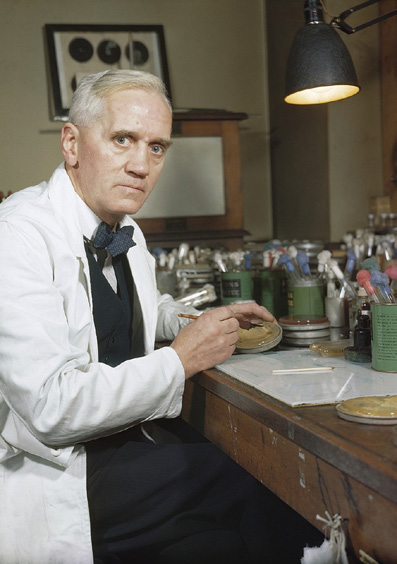
Alexander Fleming (b. 1881 d. 1955)
Profile: Howard Florey and Ernst Chain
- In 1939, Florey and Chain discovered that penicillin killed bacteria in infected mice. They experimented on a local policeman and found the medicine worked well, but the man died when they ran out of penicillin.
- They developed methods for mass production of penicillin in the early 1940s, making it widely available to treat infections during and after World War II. However, it took a long period of time to grow enough penicillin for a human.
- By 1941, they had enough penicillin to treat one person.
- US drug companies funded mass production, especially after the US entered WWII in 1942, as it saved many wounded soldiers.
- British companies also started mass production in 1943 and would quickly develop enough penicillin to treat all wounded soldiers on D-Day in 1944.
- Fleming, Florey, and Chain were all awarded the Nobel Prize in 1945 for their work.
- Penicillin transformed medicine, reducing deaths from otherwise fatal infections and paving the way for the development of more antibiotics.
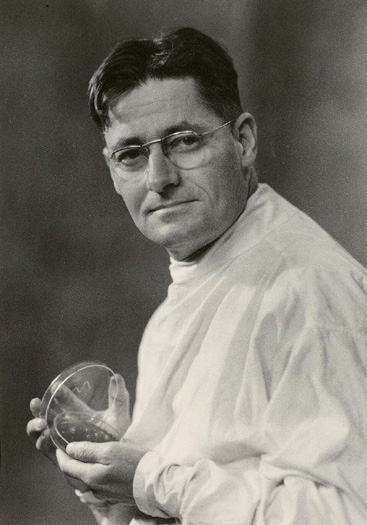
Howard Florey (b. 1898 d. 1968)
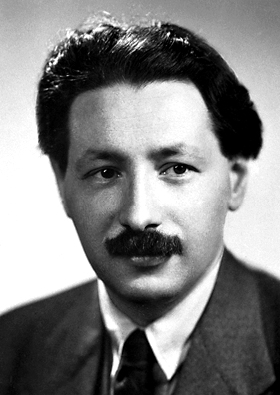
Ernst Chain (b. 1906 d. 1979)
Unlock Modern doctors and medical professionals
Sign up to unlock the rest of this topic — plus every other topic, video, flashcard set and eBook guide in your SnapRevise Digital subscription.
Cancel anytime — instant access the moment you sign up.
Report an Issue
Spotted something wrong? Let us know and we'll take a look.