
GCSE Physics (CIE)
Topic Summaries
Light, colour, and ray diagrams
Visible light
- Humans are only capable of seeing visible light.
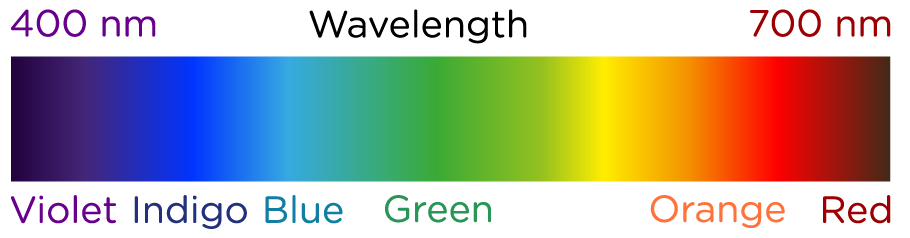
- Visible light consists of a spectrum of different colours. Each colour corresponds to a small range of wavelengths. Red light has the longest wavelength and the lowest frequency. Violet light has the shortest wavelength and the highest frequency.
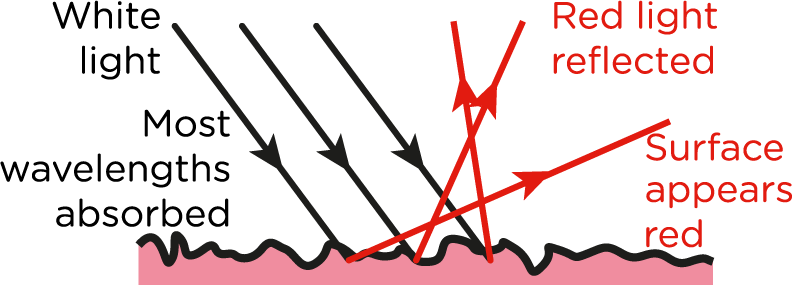
- Specular reflection is when light reflects off a smooth surface. Diffuse reflection is when light reflects at different angles off a rough surface
- Light reflects in a single direction in specular reflection to form a clear image, such as with a mirror.
- Light will scatter after diffuse reflection. We cannot see an image but can see the colour of the surface it reflected from.
- Transparent materials will allow visible light to pass through. Translucent materials will also allow light to pass through but objects can’t be as clearly seen through them (e.g. frosted glass).
Unlock Visible light
Sign up to unlock the rest of this topic — plus every other topic, video, flashcard set and eBook guide in your SnapRevise Digital subscription.
Cancel anytime — instant access the moment you sign up.
Report an Issue
Spotted something wrong? Let us know and we'll take a look.