
GCSE Maths (AQA)
435 videos | 33 hours
Please subscribe to watch this video.
This, and all other videos, are included in our premium subscriptions.
Premium accounts get access to all videos.
Enable autoplay to keep watching
Your browser is blocking videos from playing automatically. To turn it back on:
Safari (Mac): Click the Safari menu item in the top bar, then Settings → Websites → Auto-Play, then set Auto-Play to Allow All Auto-Play for the current website.
Safari (iPhone/iPad): open the Settings app, then Apps → Safari → Auto-Play, and select Allow All Auto-Play.
Area of a Rectangle
- Area of a rectangle can be calculated by breaking it up into squares of known area
- Area is a measure of the amount of space that a shape covers in two dimensions
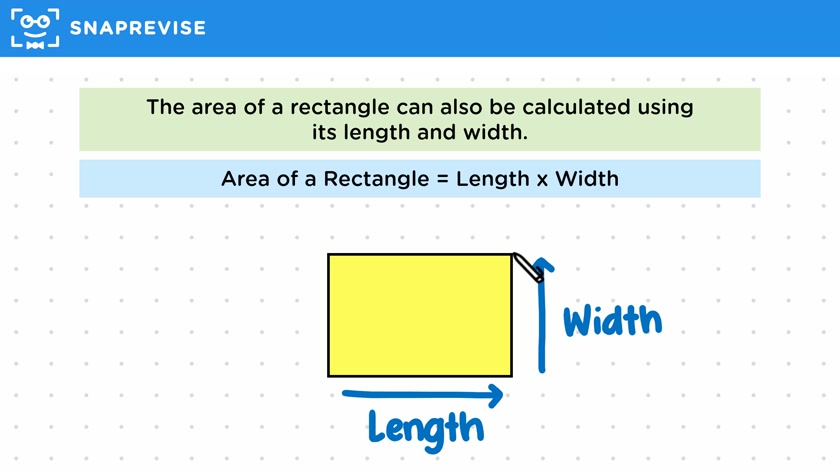
- Area of a rectangle can also be calculated using its length and width
- The area of a rectangle is equal to its length multiplied by its width
- Length is the distance the rectangle covers in one direction, width is the distance it covers in the perpendicular direction
- Multiplying the length and width gives the total number of unit squares covered by the rectangle
- The formula for calculating the area of a rectangle is important for calculating areas of other shapes
- Example: a plot of land with a length of 100 meters and a width of 20 meters has an area of 2000 square meters or 0.002 square kilometers
Please subscribe to access these revision notes.
This, and all other video notes, are included in our premium subscriptions.
Premium accounts get access to all videos and revision notes.
372
questions for Geometry and measures
190
questions for Mensuration and calculation