
GCSE Maths (AQA)
435 videos | 33 hours
Please subscribe to watch this video.
This, and all other videos, are included in our premium subscriptions.
Premium accounts get access to all videos.
Enable autoplay to keep watching
Your browser is blocking videos from playing automatically. To turn it back on:
Safari (Mac): Click the Safari menu item in the top bar, then Settings → Websites → Auto-Play, then set Auto-Play to Allow All Auto-Play for the current website.
Safari (iPhone/iPad): open the Settings app, then Apps → Safari → Auto-Play, and select Allow All Auto-Play.
Density Calculations
- Density is the mass per unit volume of an object
- Density can be calculated by dividing the mass of an object by its volume
- The formula triangle can be used to remember the relationship between density, mass, and volume
- Density is typically measured in grams per meters cubed
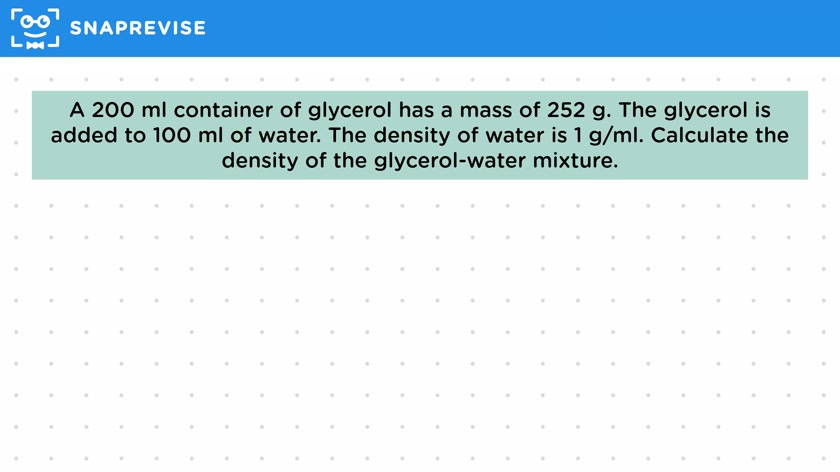
- To calculate the density of a mixture of two substances with different densities, find the new mass and volume of the mixture
- The density of a mixture can be calculated using the formula: density = mass/volume
- Example question: Calculate the density of a glycerol-water mixture by finding the mass and volume of each substance and using the formula density = mass/volume
Please subscribe to access these revision notes.
This, and all other video notes, are included in our premium subscriptions.
Premium accounts get access to all videos and revision notes.
372
questions for Geometry and measures
190
questions for Mensuration and calculation