
GCSE Maths (AQA)
435 videos | 33 hours
Please subscribe to watch this video.
This, and all other videos, are included in our premium subscriptions.
Premium accounts get access to all videos.
Enable autoplay to keep watching
Your browser is blocking videos from playing automatically. To turn it back on:
Safari (Mac): Click the Safari menu item in the top bar, then Settings → Websites → Auto-Play, then set Auto-Play to Allow All Auto-Play for the current website.
Safari (iPhone/iPad): open the Settings app, then Apps → Safari → Auto-Play, and select Allow All Auto-Play.
Probability
Expected Frequency
5:11
Spec
3.5
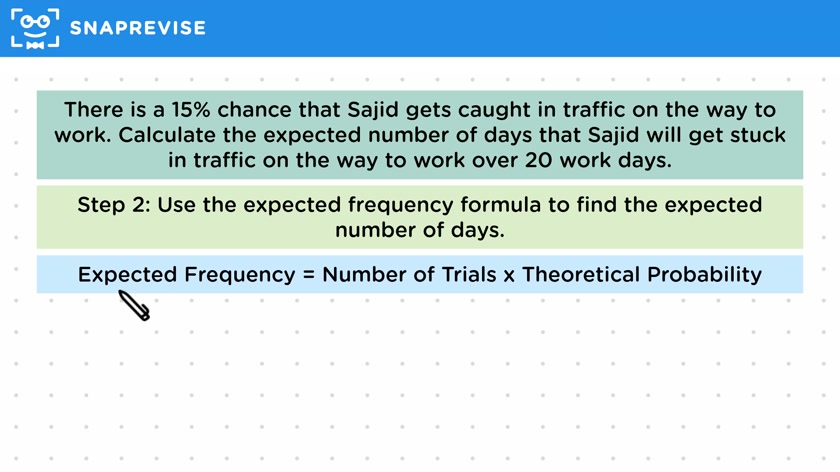
- Expected frequency is the frequency we expect to see based on the theoretical probability of an outcome in a probability experiment.
- The expected frequency is calculated by multiplying the number of trials by the theoretical probability.
- The expected frequency formula is: expected frequency = number of trials * theoretical probability.
- The expected frequency is an estimate and may not be the exact outcome in the experiment.
- The formula for calculating the theoretical probability is: probability = number of successful outcomes / total number of outcomes.
- The expected number of days that SAR will get stuck in traffic over 20 work days is 3.
- The expected number of times Luca would draw a 7 or an 8 after repeating the process 40 times is 6.
Please subscribe to access these revision notes.
This, and all other video notes, are included in our premium subscriptions.
Premium accounts get access to all videos and revision notes.
Report an Issue
Spotted something wrong? Let us know and we'll take a look.