
GCSE Maths (AQA)
435 videos | 33 hours
Please subscribe to watch this video.
This, and all other videos, are included in our premium subscriptions.
Premium accounts get access to all videos.
Enable autoplay to keep watching
Your browser is blocking videos from playing automatically. To turn it back on:
Safari (Mac): Click the Safari menu item in the top bar, then Settings → Websites → Auto-Play, then set Auto-Play to Allow All Auto-Play for the current website.
Safari (iPhone/iPad): open the Settings app, then Apps → Safari → Auto-Play, and select Allow All Auto-Play.
Translation
- A translation is a transformation that moves a shape without changing its size or orientation
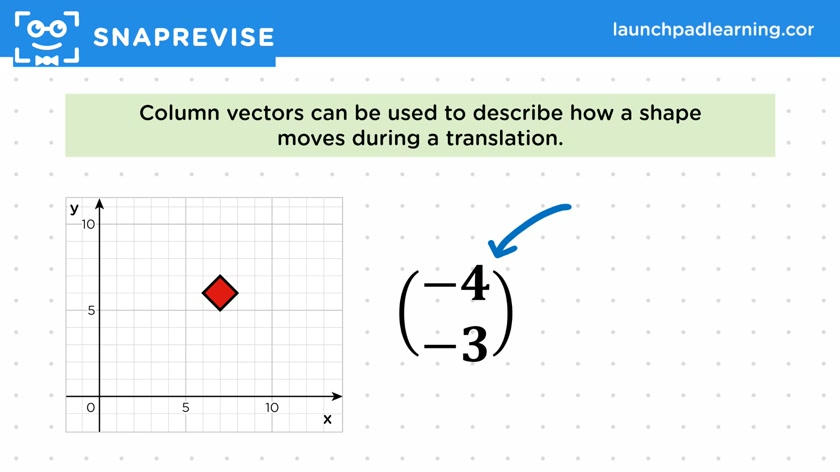
- Column vectors can be used to describe how a shape moves during a translation
- The top value of a column vector represents the number of units the shape moves to the right, while the bottom value represents the number of units the shape moves up
- If the top value of the column vector is negative, the shape moves in the opposite direction (left instead of right)
- If the bottom value of the column vector is negative, the shape moves in the opposite direction (down instead of up)
- The image of the object after a translation has been moved to the left and down
- To write a translation vector, count the number of squares moved left or right and up or down, and write it in vector form (e.g. [4, 5])
Please subscribe to access these revision notes.
This, and all other video notes, are included in our premium subscriptions.
Premium accounts get access to all videos and revision notes.
372
questions for Geometry and measures
164
questions for Properties and constructions