

Enterprise and entrepreneurship
Business opportunities
Business objectives
- - Business aims and objectives
- - Changing business aims and objectives
- - Revenues, costs, and profits
- - Cash and cash flow
- - Sources of business finance
- - Factors influencing business location
- - Types of business ownership
- - The marketing mix (4Ps)
- - Business plans
- - Businesses success and failure
- - Methods of business growth and their impact
- - Sources of finance for growing businesses
- - Measuring business size
- - Impact of globalisation on businesses
- - Barriers to international trade
- - How businesses compete internationally
- - Multinational companies (MNCs)
- - Ethical considerations in business activity
- - Pressure groups
- - Environmental concerns in business activity
Influences on businesses
Marketing
Operations
Finance
Human resources
- - Function of human resources
- - Organisational structures
- - Leadership styles
- - Ways of working
- - The impact of technology on working arrangements
- - Job roles and responsibilities
- - Effective communication
- - Types of recruitment
- - Key recruitment documents
- - Stages in the recruitment process
- - Employment contracts and legal controls
- - Trade unions
- - Downsizing and redundancy
- - Training and development
- - Motivation in the workplace
Formula sheet
Enterprise and entrepreneurship
Business opportunities
Business objectives
- - Business aims and objectives
- - Changing business aims and objectives
- - Revenues, costs, and profits
- - Cash and cash flow
- - Sources of business finance
- - Factors influencing business location
- - Types of business ownership
- - The marketing mix (4Ps)
- - Business plans
- - Businesses success and failure
- - Methods of business growth and their impact
- - Sources of finance for growing businesses
- - Measuring business size
- - Impact of globalisation on businesses
- - Barriers to international trade
- - How businesses compete internationally
- - Multinational companies (MNCs)
- - Ethical considerations in business activity
- - Pressure groups
- - Environmental concerns in business activity
Influences on businesses
Marketing
Operations
Finance
Human resources
- - Function of human resources
- - Organisational structures
- - Leadership styles
- - Ways of working
- - The impact of technology on working arrangements
- - Job roles and responsibilities
- - Effective communication
- - Types of recruitment
- - Key recruitment documents
- - Stages in the recruitment process
- - Employment contracts and legal controls
- - Trade unions
- - Downsizing and redundancy
- - Training and development
- - Motivation in the workplace
Formula sheet
Stock (or inventory) refers to the raw materials, work-in-progress, and finished goods held by a business. Managing stock effectively is critical for ensuring smooth production, minimising costs, and meeting customer demand. There are two primary tools used in stock management: bar gate stock graphs, and the just-in-time approach.
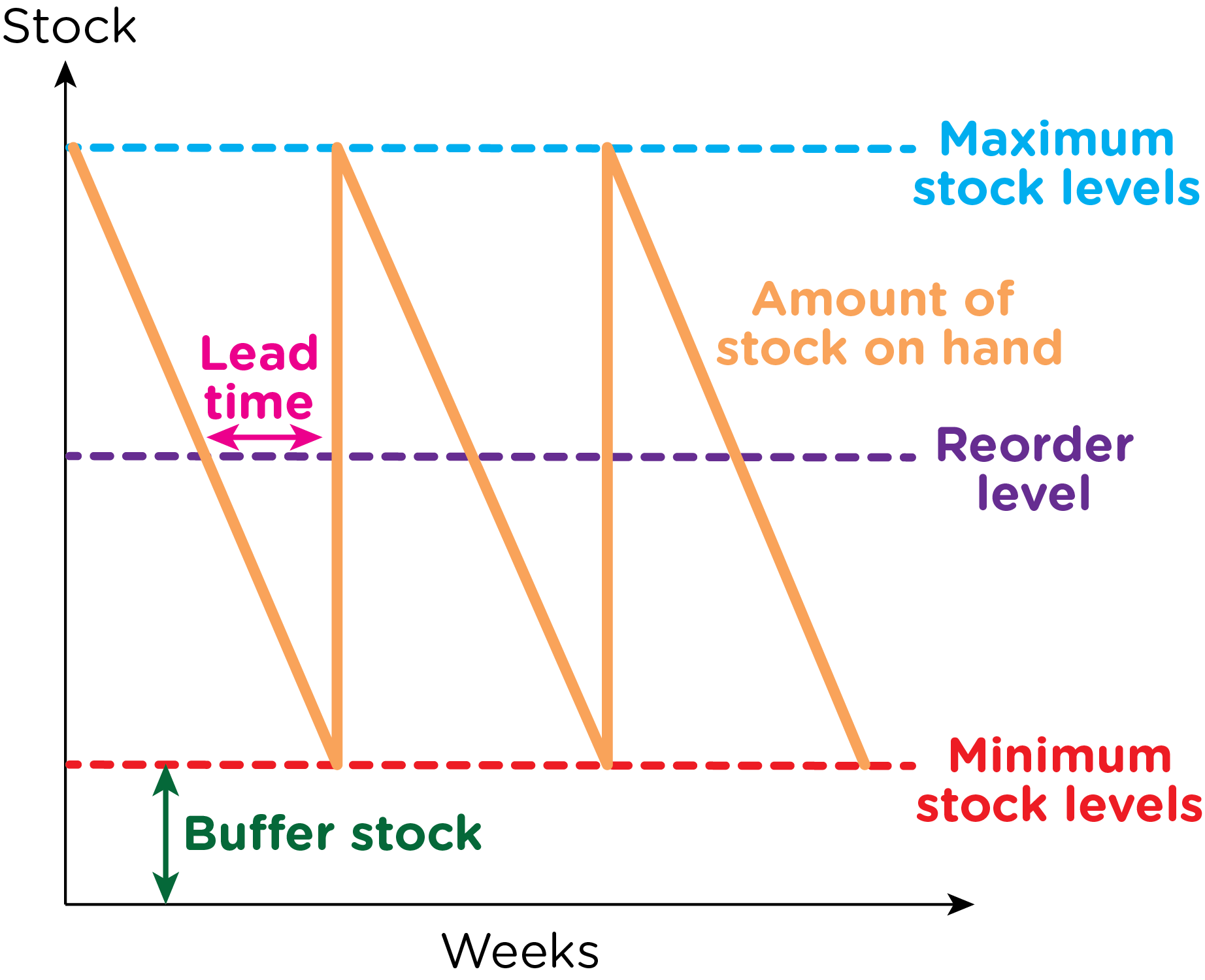
- Bar gate stock graphs: a visual way of showing how stock levels change over time. For example, a bakery might use a bar-gate graph to ensure flour is reordered before stock levels fall below the minimum, avoiding disruption to daily operations. These graphs help businesses determine:
- Minimum stock level: the lowest amount of stock that should be kept on hand.
- Maximum stock level: the highest level to avoid overstocking.
- Reorder level: the point at which new stock should be ordered to avoid running out.
- Lead time: the time between placing an order and receiving the stock.
- Just-in-Time (JIT) stock control: is a lean stock management strategy where materials are ordered and received only when needed for production or sale.This method aims to reduce storage costs and avoid excess inventory
| Advantages of JIT | Disadvantages of JIT |
| Lower storage costs: no need to maintain large warehouses. | High dependency on suppliers: delays or disruptions in the supply chain can halt production. |
| Less wastage: perishable goods or obsolete stock are less likely to be wasted. | No buffer stock: unexpected demand or supplier issues can lead to stockouts |
| Improved cash flow: capital isn’t tied up in unused inventory. | No ability to limit disruption: delays in any one part of the system leave the entire production chain vulnerable. |
Unlock Managing stock
Subscribe to SnapRevise+ to get immediate access to the rest of this resource.
Premium accounts get immediate access to this resource.