

GCSE
>
Business
>
AQA
>
GCSE Business Topic Summaries
>
Marketing
>
Product – the design mix and product life cycle
Enterprise and entrepreneurship
Business opportunities
Business objectives
- - Business aims and objectives
- - Changing business aims and objectives
- - Revenues, costs, and profits
- - Cash and cash flow
- - Sources of business finance
- - Limited and unlimited liability
- - Factors influencing business location
- - Types of business ownership
- - The marketing mix (4Ps)
- - Business plans
- - Businesses success and failure
- - Methods of business growth and their impact
- - Sources of finance for growing businesses
- - Measuring business size
- - Impact of globalisation on businesses
- - Barriers to international trade
- - How businesses compete internationally
- - Multinational companies (MNCs)
- - Ethical considerations in business activity
- - Pressure groups
- - Environmental concerns in business activity
Influences on businesses
Marketing
Operations
Finance
Human resources
- - Function of human resources
- - Organisational structures
- - Ways of working
- - The impact of technology on working arrangements
- - Job roles and responsibilities
- - Effective communication
- - Types of recruitment
- - Key recruitment documents
- - Stages in the recruitment process
- - Employment contracts and legal controls
- - Downsizing and redundancy
- - Training and development
- - Motivation in the workplace
Formula sheet
Enterprise and entrepreneurship
Business opportunities
Business objectives
- - Business aims and objectives
- - Changing business aims and objectives
- - Revenues, costs, and profits
- - Cash and cash flow
- - Sources of business finance
- - Limited and unlimited liability
- - Factors influencing business location
- - Types of business ownership
- - The marketing mix (4Ps)
- - Business plans
- - Businesses success and failure
- - Methods of business growth and their impact
- - Sources of finance for growing businesses
- - Measuring business size
- - Impact of globalisation on businesses
- - Barriers to international trade
- - How businesses compete internationally
- - Multinational companies (MNCs)
- - Ethical considerations in business activity
- - Pressure groups
- - Environmental concerns in business activity
Influences on businesses
Marketing
Operations
Finance
Human resources
- - Function of human resources
- - Organisational structures
- - Ways of working
- - The impact of technology on working arrangements
- - Job roles and responsibilities
- - Effective communication
- - Types of recruitment
- - Key recruitment documents
- - Stages in the recruitment process
- - Employment contracts and legal controls
- - Downsizing and redundancy
- - Training and development
- - Motivation in the workplace
Formula sheet
Marketing involves understanding customer needs and creating a strategic mix of product, price, promotion, and place (the 4Ps) to deliver value, build brand, and support competitive advantage.
- The design mix refers to balancing function, aesthetics, and cost when designing a product.
- Function: the product must work as intended (e.g.a smartphone that connects reliably).
- Aesthetics: appeal and style matter (e.g.Apple iPhones are sleek and visually attractive).
- Cost: production costs must be kept low to maintain profitability.
The product life cycle describes the stages a product goes through:
- Introduction: product launch with low sales and high costs.
- Growth: sales rise rapidly, profits start increasing.
- Maturity: sales peak; intense competition; prices may fall.
- Decline: sales drop as consumers move on
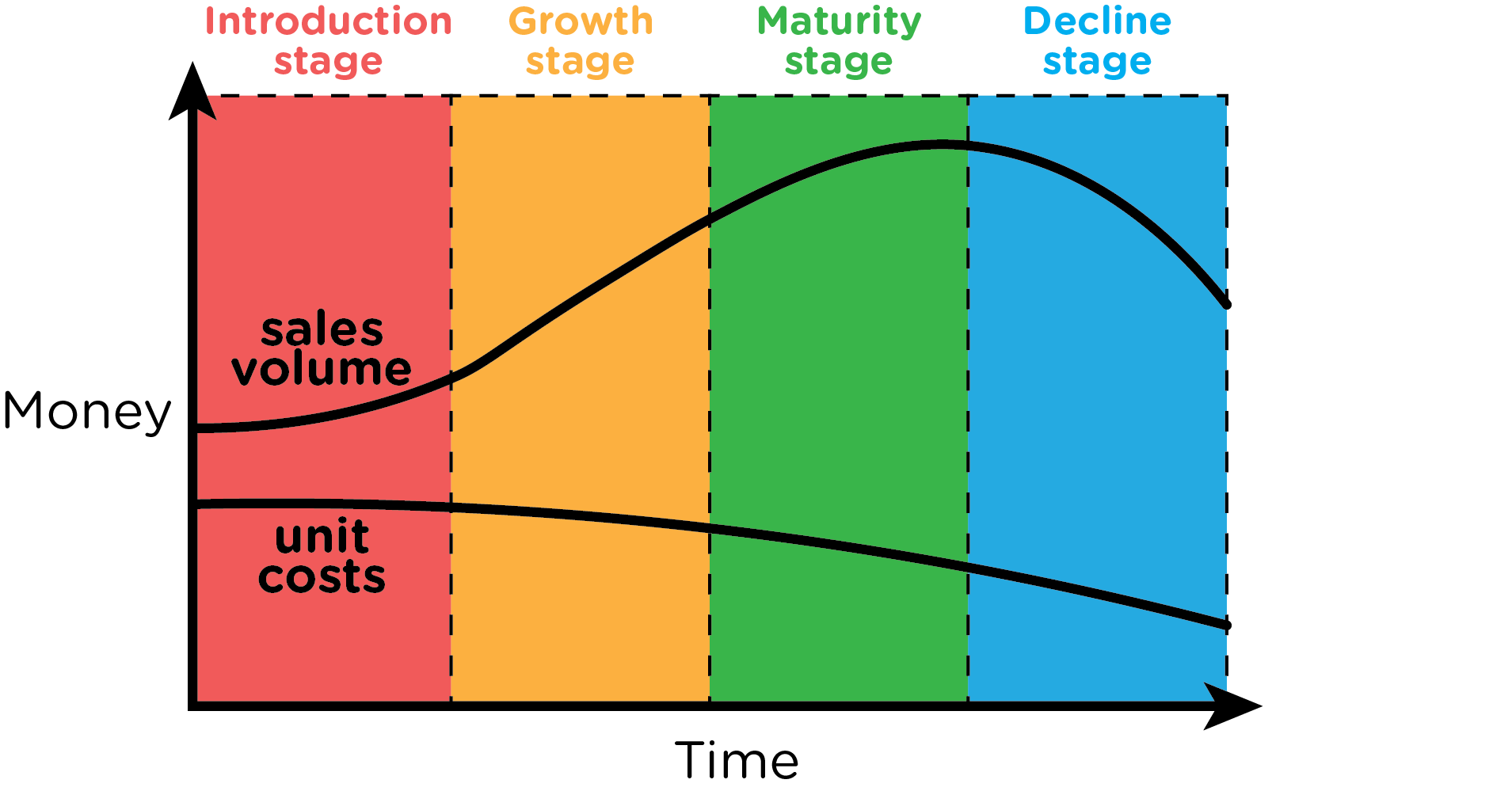
- Extension strategies can prolong the maturity stage and delay decline:
- Updating the product (e.g. new iPhone features).
- Reducing price to attract price-sensitive buyers.
- Finding new market segments (e.g. subscriptions, accessories).
- Differentiation is important because it helps a business stand out from competitors. For example, Dyson vacuums differentiate through advanced technology and design. Differentiation may be based on quality, service, branding, or unique features.
Unlock Product – the design mix and product life cycle
Subscribe to SnapRevise+ to get immediate access to the rest of this resource.
Premium accounts get immediate access to this resource.