
GCSE Computer Science (OCR)
Topic Summaries
ALGORITHMS AND PROGRAMMING: Boolean logic
Logic gates and symbols
- Boolean logic is used in computer systems to make decisions using only two states: 1 = True, and 0 = False.
- It is based on logic gates and Boolean operators: AND, OR, and NOT. These are used in logic diagrams, truth tables, and real-world decision-making in code and digital circuits.
| Operator | Description | Symbol (logic gate) |
| AND | True only if both inputs are true | 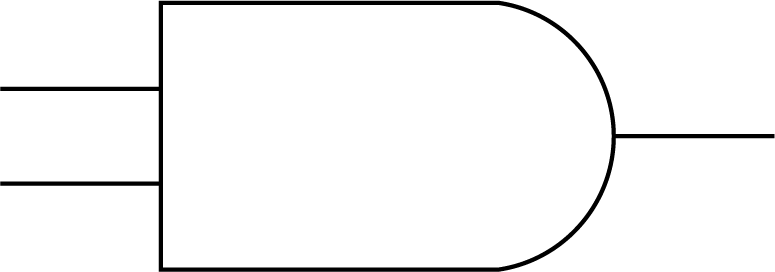 |
| OR | True if at least one input is true | 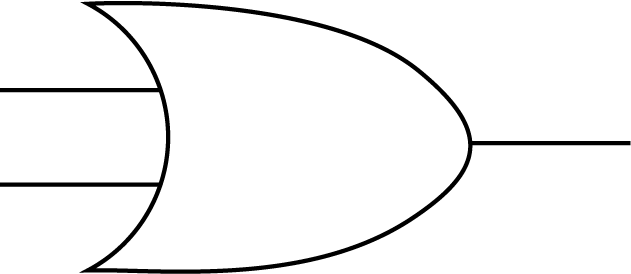 |
| NOT | Reverses the input (True becomes False, and vice versa) | 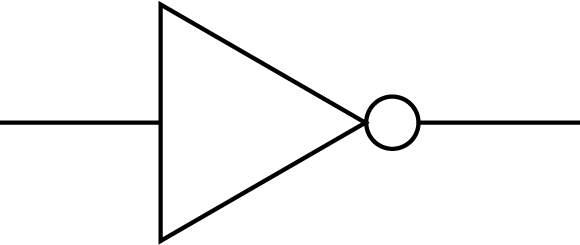 |
- Logic diagrams show how logic gates are connected. You need to be able to:
- Recognise AND, OR, and NOT symbols.
- Draw diagrams from expressions.
- Trace how inputs flow through each gate.
- Tip: work from left to right and evaluate gate-by-gate when solving a diagram.
- Alternative notations you may see:
| Symbol | Meaning |
| ∧ | AND |
| ∨ | OR |
| ¬ | NOT |
| T | True (1) |
| F | False (0) |
Unlock Logic gates and symbols
Sign up to unlock the rest of this topic — plus every other topic, video, flashcard set and eBook guide in your SnapRevise Digital subscription.
Cancel anytime — instant access the moment you sign up.
Report an Issue
Spotted something wrong? Let us know and we'll take a look.