

Topic Summaries
Fluvial landforms resulting from erosion and deposition
Natural and tectonic hazards
Earth layers and earthquakes
Tectonic plate margins
Responses to tectonic hazards
Risks of tectonic hazards
Weather hazards and atmospheric circulation
Tropical storm hazards
Responding to tropical storms
Climate change
Components and characteristics of ecosystems
Tropical rainforest ecosystems
Hot desert ecosystems
Cold environment ecosystems
Coastal landscapes
Coastal landform processes
Management strategies for coastal landscapes
River landscapes
Fluvial landform processes
Management strategies for floods
Glacial landscapes
Glacial landform processes
Patterns of urban change
Urban sustainability and patterns of urban development
Global development gap and global aid
Rapid economic development
Economic changes in the UK
Resource management
Food supply
Food supply and water supply
Water supply
Natural and tectonic hazards
Earth layers and earthquakes
Tectonic plate margins
Responses to tectonic hazards
Risks of tectonic hazards
Weather hazards and atmospheric circulation
Tropical storm hazards
Responding to tropical storms
Climate change
Components and characteristics of ecosystems
Tropical rainforest ecosystems
Hot desert ecosystems
Cold environment ecosystems
Coastal landscapes
Coastal landform processes
Management strategies for coastal landscapes
River landscapes
Fluvial landform processes
Management strategies for floods
Glacial landscapes
Glacial landform processes
Patterns of urban change
Urban sustainability and patterns of urban development
Global development gap and global aid
Rapid economic development
Economic changes in the UK
Resource management
Food supply
Food supply and water supply
Water supply
- Meanders: large bends in the river, typically found in the middle/lower courses. The outer bend has a river cliff due to erosion, while the inner bend has a slip-off slope due to deposition. The are formed when:
- The river flows faster on the outer bend of a meander, increasing erosion through hydraulic action and abrasion.
- Lateral erosion undercuts the riverbank, forming a river cliff.
- On the inner bend, the water flows slower due to friction, leading to deposition of material like sand and shingle, forming a slip-off slope.
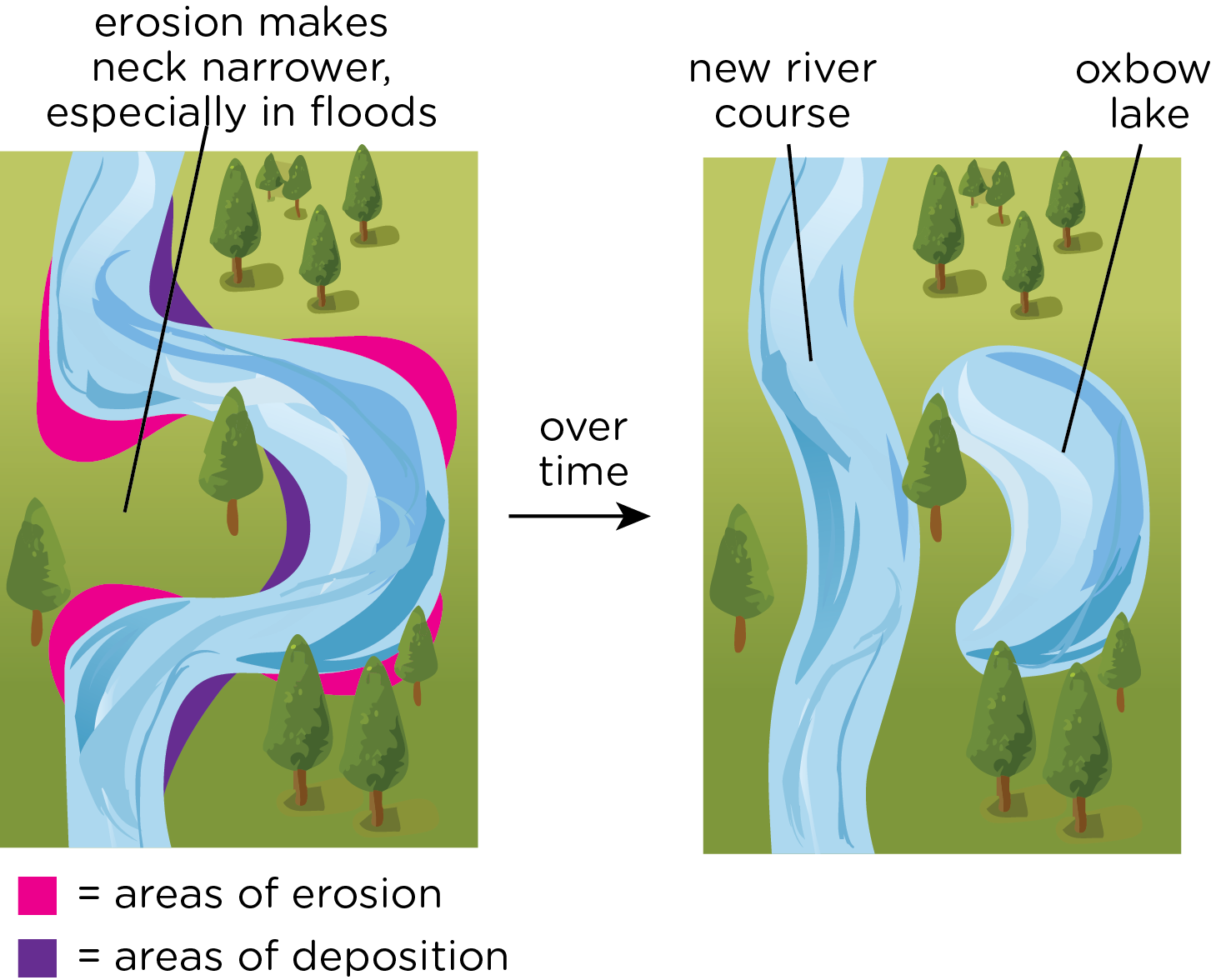
- Ox-bow lakes: a crescent-shaped lake formed when a meander is cut off from the main channel, found in the lower course of a river. They are formed when:
- Lateral erosion on the outer bends of a meander causes the bends to move closer, narrowing the meander neck.
- In a flood the river cuts through the neck creating a straight channel.
- Deposition seals off the old meander, leaving an ox-bow lake.
Unlock Fluvial landforms resulting from erosion and deposition
Subscribe to SnapRevise+ to get immediate access to the rest of this resource.
Premium accounts get immediate access to this resource.