
GCSE Physics (OCR A)
Topic Summaries
Science skills: Experimental procedures
Safe experiments
- Measures should be taken so experiments are conducted safely.
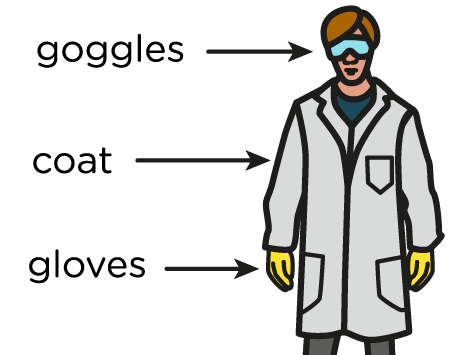
- Sensible protective clothing should be worn, including goggles or safety visors to protect the eyes from harmful substances, lab coats to protect clothing from damage or harmful substances, and gloves when handling hazardous materials. Long hair should also be tied back so it is not a hazard.
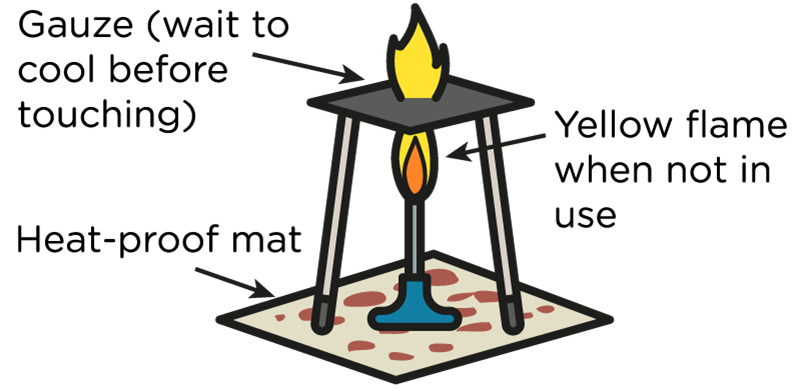
- Steps should be taken to ensure Bunsen burners are used safely: using a heatproof mat underneath, and using tongs for any substances/equipment that is heated. The burner should be left on a yellow flame and gas taps should be turned off when not in use.
- Hazardous substances, such as chemicals or radioactive materials, should be handled with care and stored when not in use.
- Containers should be correctly marked with their hazards (e.g. skin irritant).
- Particularly dangerous substances should not be handled directly.
- Flammable substances should be kept away from naked flames (e.g. ethanol).
- Biohazards, such as bacterial cultures, should be handled with care.
- Aseptic techniques should be used when preparing bacterial cultures.
- Disinfectant should be used after exposure to biohazards to prevent contamination.
- Avoid contact with skin of stains (e.g. Toluidine blue or DCPIP).
- Hands should be washed after handling biohazards or unsterilised samples.
- All equipment should be checked regularly.
- Clamps and bosses should be tightly secured.
- Electrical equipment should be inspected to ensure they have no live wires.
Unlock Safe experiments
Sign up to unlock the rest of this topic — plus every other topic, video, flashcard set and eBook guide in your SnapRevise Digital subscription.
Cancel anytime — instant access the moment you sign up.
Report an Issue
Spotted something wrong? Let us know and we'll take a look.