

Topic Summaries
Geological landforms resulting from erosion
Natural and tectonic hazards
Earth layers and earthquakes
Tectonic plate margins
Responses to tectonic hazards
Risks of tectonic hazards
Weather hazards and atmospheric circulation
Tropical storm hazards
Responding to tropical storms
Climate change
Components and characteristics of ecosystems
Tropical rainforest ecosystems
Hot desert ecosystems
Cold environment ecosystems
Coastal landscapes
Coastal landform processes
Management strategies for coastal landscapes
River landscapes
Fluvial landform processes
Management strategies for floods
Glacial landscapes
Glacial landform processes
Patterns of urban change
Urban sustainability and patterns of urban development
Global development gap and global aid
Rapid economic development
Economic changes in the UK
Resource management
Food supply
Food supply and water supply
Water supply
Natural and tectonic hazards
Earth layers and earthquakes
Tectonic plate margins
Responses to tectonic hazards
Risks of tectonic hazards
Weather hazards and atmospheric circulation
Tropical storm hazards
Responding to tropical storms
Climate change
Components and characteristics of ecosystems
Tropical rainforest ecosystems
Hot desert ecosystems
Cold environment ecosystems
Coastal landscapes
Coastal landform processes
Management strategies for coastal landscapes
River landscapes
Fluvial landform processes
Management strategies for floods
Glacial landscapes
Glacial landform processes
Patterns of urban change
Urban sustainability and patterns of urban development
Global development gap and global aid
Rapid economic development
Economic changes in the UK
Resource management
Food supply
Food supply and water supply
Water supply
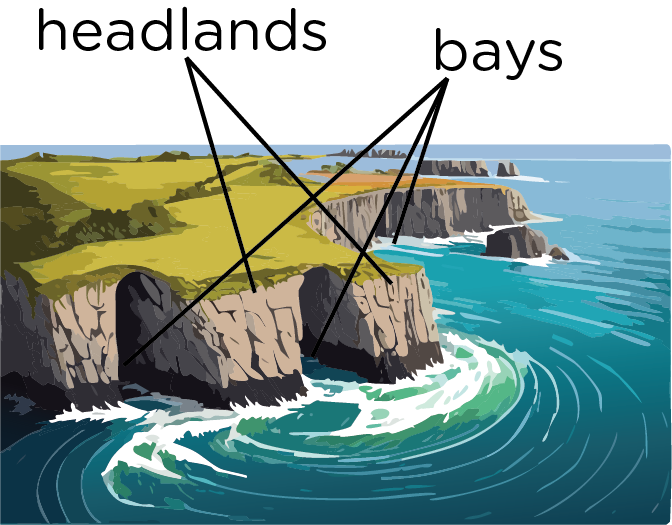
- Headlands and bays:
- Found on discordant coastlines, where alternating bands of hard and soft rock run perpendicular to the coast.
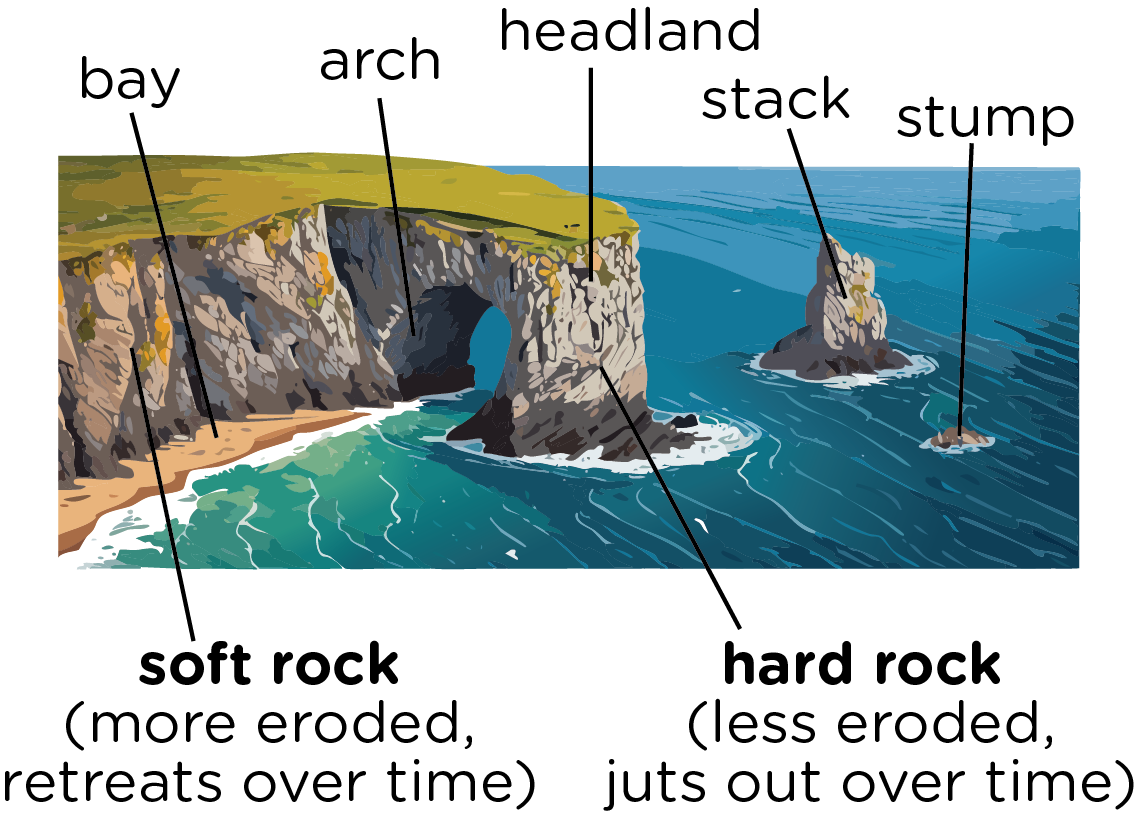
- Hard rock (e.g. limestone, granite) resists erosion, forming headlands that protrudes into the sea.
- Soft rock (e.g. clay, sand) erodes more easily, forming bays.
- Headlands are exposed to high-energy waves, forming cliffs, wave-cut platforms, and stacks.
- Bays are sheltered by headlands, experience low-energy waves, leading to deposition and the formation of beaches.
- Cliffs and wave-cut platforms
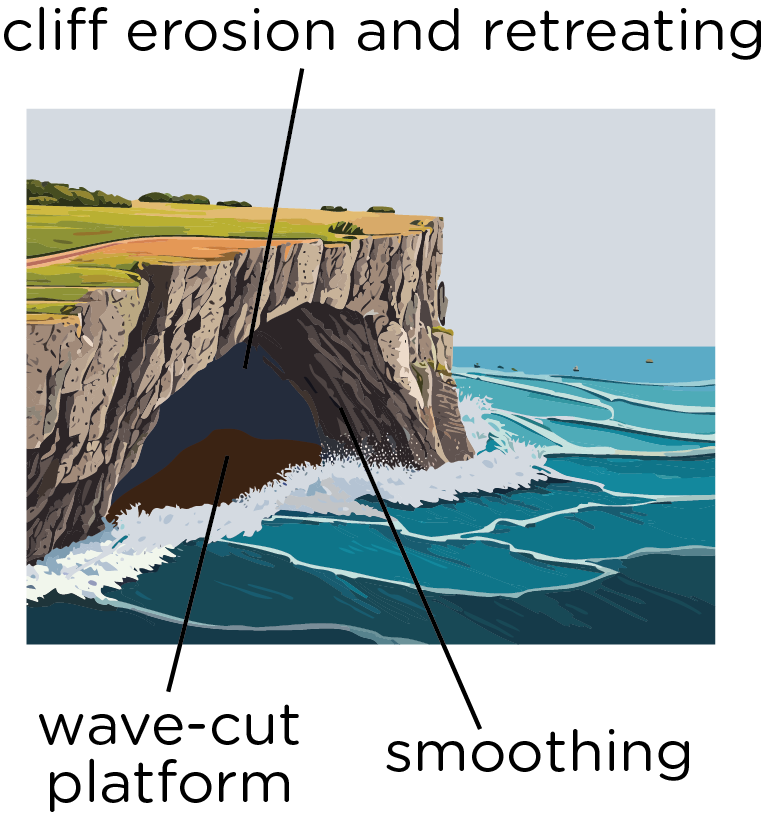
- Erosion at the base: hydraulic action and abrasion erode the base of a cliff, creating a wave-cut notch.
- Collapse: the overhanging cliff becomes unstable and collapses due to gravity (e.g. rockfall or landslide).
- Retreat: the cliff face retreats inland, leaving behind a wave-cut platform (a flat, rocky area exposed at low tide).
- Smoothing: the wave-cut platform is smoothed over time by abrasion as pebbles grind against it.
- Caves, arches, stacks, and stumps:
- Cracks and joints: the sea erodes weaknesses in the rock (e.g. joints, cracks, or faults) through hydraulic action, wave pounding, abrasion, and solution.
- Cave: over time, the cracks expand and develops into a cave.
- Arch: if the cave continues to erode through a headland, it forms an arch.
- Stack: the roof of the arch collapses due to weathering and wave energy, leaving a stack (a tall column of rock).
- Stump: the stack is further eroded by waves, eventually collapsing to form a stump, which is visible at low tide.
Unlock Geological landforms resulting from erosion
Subscribe to SnapRevise+ to get immediate access to the rest of this resource.
Premium accounts get immediate access to this resource.