

Topic Summaries
Fluvial landforms resulting from erosion
Natural and tectonic hazards
Earth layers and earthquakes
Tectonic plate margins
Responses to tectonic hazards
Risks of tectonic hazards
Weather hazards and atmospheric circulation
Tropical storm hazards
Responding to tropical storms
Climate change
Components and characteristics of ecosystems
Tropical rainforest ecosystems
Hot desert ecosystems
Cold environment ecosystems
Coastal landscapes
Coastal landform processes
Management strategies for coastal landscapes
River landscapes
Fluvial landform processes
Management strategies for floods
Glacial landscapes
Glacial landform processes
Patterns of urban change
Urban sustainability and patterns of urban development
Global development gap and global aid
Rapid economic development
Economic changes in the UK
Resource management
Food supply
Food supply and water supply
Water supply
Natural and tectonic hazards
Earth layers and earthquakes
Tectonic plate margins
Responses to tectonic hazards
Risks of tectonic hazards
Weather hazards and atmospheric circulation
Tropical storm hazards
Responding to tropical storms
Climate change
Components and characteristics of ecosystems
Tropical rainforest ecosystems
Hot desert ecosystems
Cold environment ecosystems
Coastal landscapes
Coastal landform processes
Management strategies for coastal landscapes
River landscapes
Fluvial landform processes
Management strategies for floods
Glacial landscapes
Glacial landform processes
Patterns of urban change
Urban sustainability and patterns of urban development
Global development gap and global aid
Rapid economic development
Economic changes in the UK
Resource management
Food supply
Food supply and water supply
Water supply
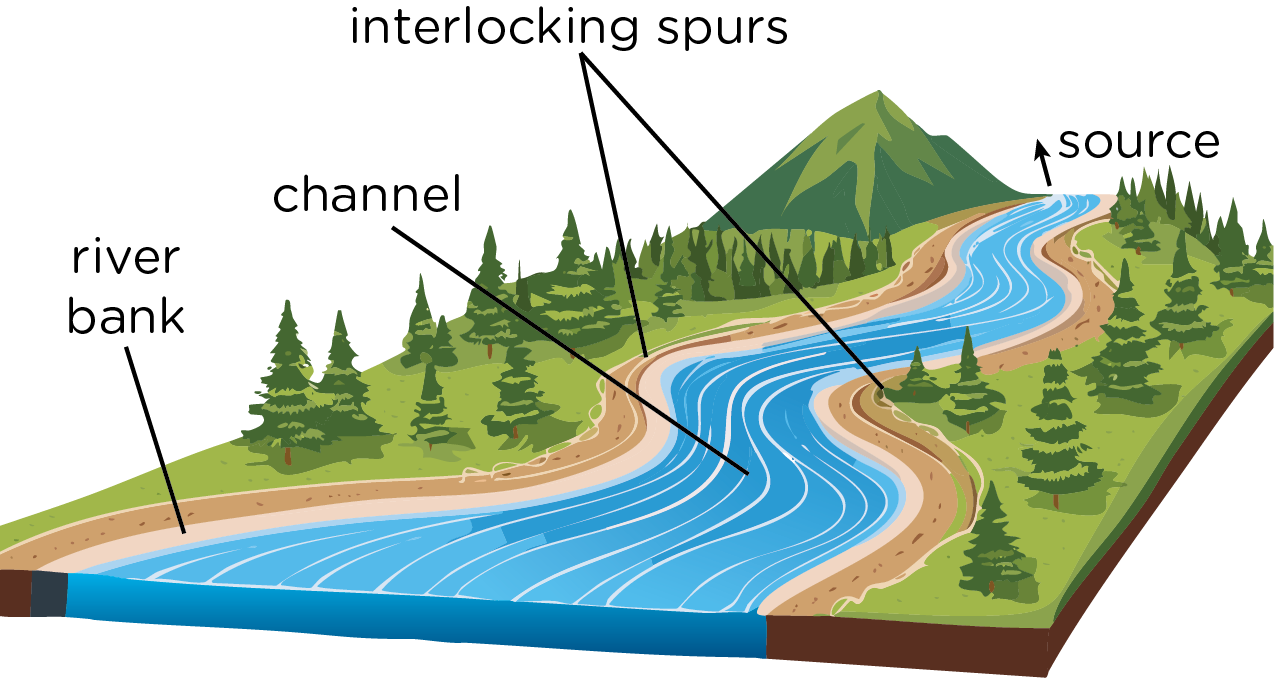
- Interlocking spurs: are found in the upper course of a river where the river flows around ridges of hard rock, creating a zig-zag pattern. Valleys are steep-sided and narrow, with a V-shaped profile, formed when:
- In the upper course, the river has low energy and erodes vertically through abrasion and hydraulic action.
- When the river meets hard, resistant rock, it cannot erode it easily.
- Instead, the river bends around the hard rock, leaving interlocking spurs of land that project into the valley.
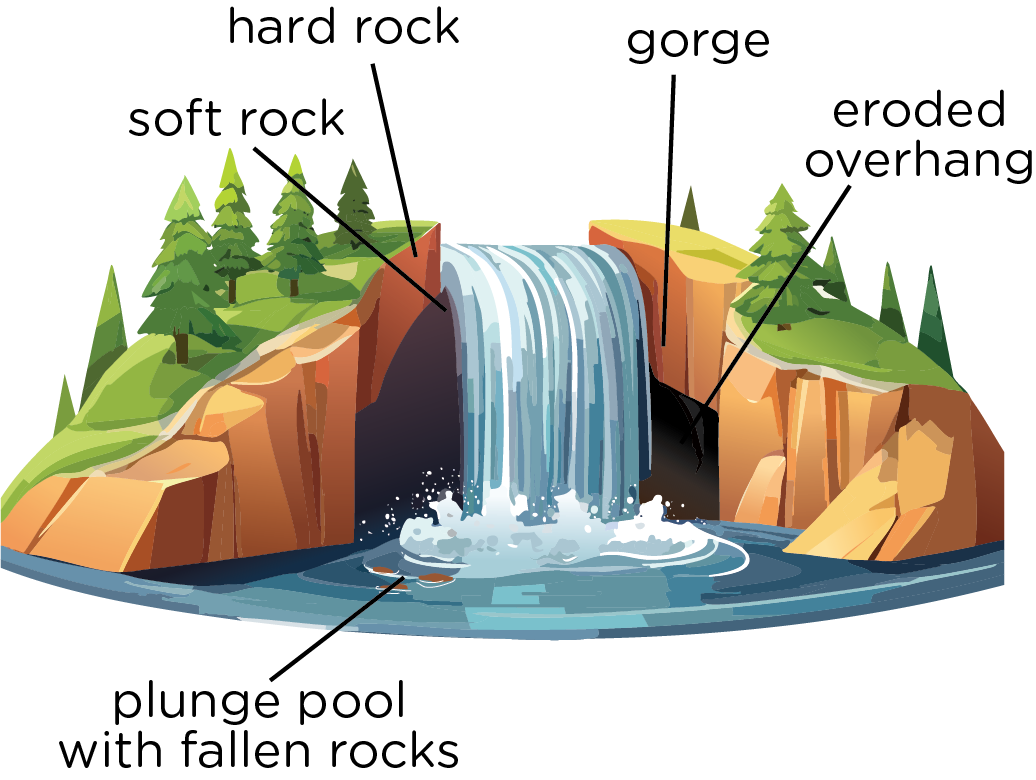
- Waterfalls and gorges: waterfalls are steep vertical drops in the river’s course, often with a plunge pool at the base. Gorges are narrow, steepsided valleys formed as waterfalls retreat upstream. They are formed when:
- A river flows over a band of hard, resistant rock that lies over soft rock.
- The soft rock is eroded faster due to abrasion and hydraulic action, creating an undercut beneath the hard rock.
- Over time, the hard rock becomes unsupported and collapses into the plunge pool.
- This process repeats, causing the waterfall to retreat upstream.
- The retreating waterfall leaves behind a steep-sided gorge.
Unlock Fluvial landforms resulting from erosion
Subscribe to SnapRevise+ to get immediate access to the rest of this resource.
Premium accounts get immediate access to this resource.