

Topic Summaries
Cyclical model of behaviour change
A-Level
>
Psychology
>
AQA
>
A-Level Psychology Topic Summaries
>
Addiction
>
Cyclical model of behaviour change
Social influence
Memory
Attachment
Approaches in psychology
Biopsychology
Clinical psychology and mental health
Research methods
Issues and debates
Relationships
Gender
Cognition and development
Schizophrenia
Stress
Eating behaviour
Aggression
Forensic psychology
Social influence
Memory
Attachment
Approaches in psychology
Biopsychology
Clinical psychology and mental health
Research methods
Issues and debates
Relationships
Gender
Cognition and development
Schizophrenia
Stress
Eating behaviour
Aggression
Forensic psychology
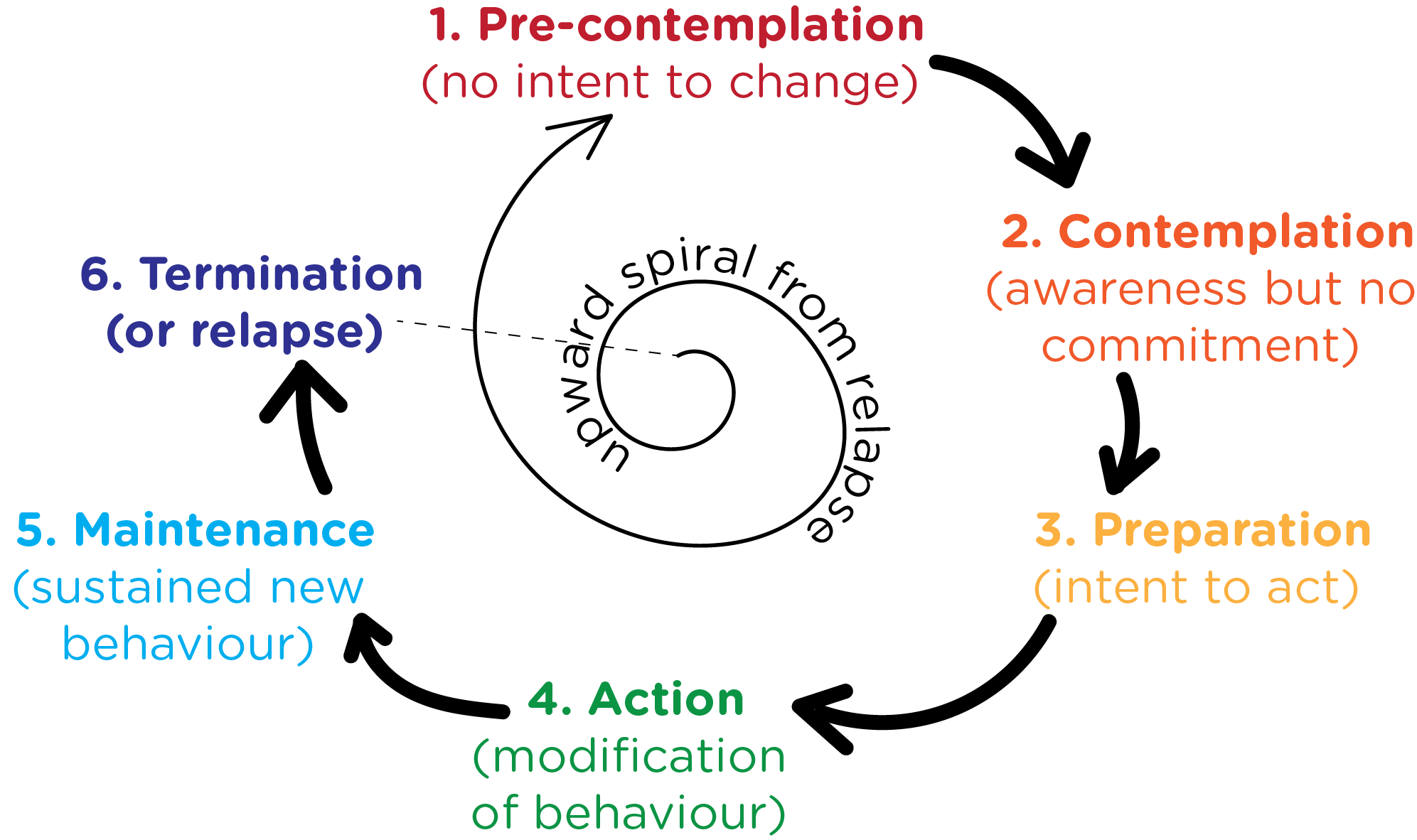
- 👥 Prochaska’s (1983) model of behavioural change: theorised that there are six stages of behaviour change, though this can vary the amount of stages differ from person to person depending on how ready a person is for change.
- Stage 1 – pre-contemplation: when a patient is thinking about change but isn’t ready to implement it. It could be due to denial or lack of motivation.
- Stage 2 – contemplation: when a patient begins to evaluate the cost/benefit factors of tackling their addiction. Many people stay on this stage for a while, so any behavioural intervention treatments applied here aren’t particularly effective.
- Stage 3 – preparation: the patient believes they are ready for change because the benefits outweigh the costs of battling the addiction (withdrawal symptoms).
- Stage 4 – action: action is taken to tackle their addiction, for example, flushing their drugs away or pouring out their alcohol. These actions must reduce the risk posed by original addiction.
- Stage 5 – maintenance: focus on preventing relapse, providing the patient with coping mechanisms for stress and withdrawal.
- Stage 6 – termination: the patient no longer depends on their addictive substance. The emphasis is on reducing the likelihood of relapse and helping them to stay clean.
Unlock Cyclical model of behaviour change
Subscribe to SnapRevise+ to get immediate access to the rest of this resource.
Premium accounts get immediate access to this resource.