

Topic Summaries
The role of stress in illness
A-Level
>
Psychology
>
AQA
>
A-Level Psychology Topic Summaries
>
Stress
>
The role of stress in illness
Social influence
Memory
Attachment
Approaches in psychology
Biopsychology
Clinical psychology and mental health
Research methods
Issues and debates
Relationships
Gender
Cognition and development
Schizophrenia
Stress
Eating behaviour
Aggression
Forensic psychology
Social influence
Memory
Attachment
Approaches in psychology
Biopsychology
Clinical psychology and mental health
Research methods
Issues and debates
Relationships
Gender
Cognition and development
Schizophrenia
Stress
Eating behaviour
Aggression
Forensic psychology
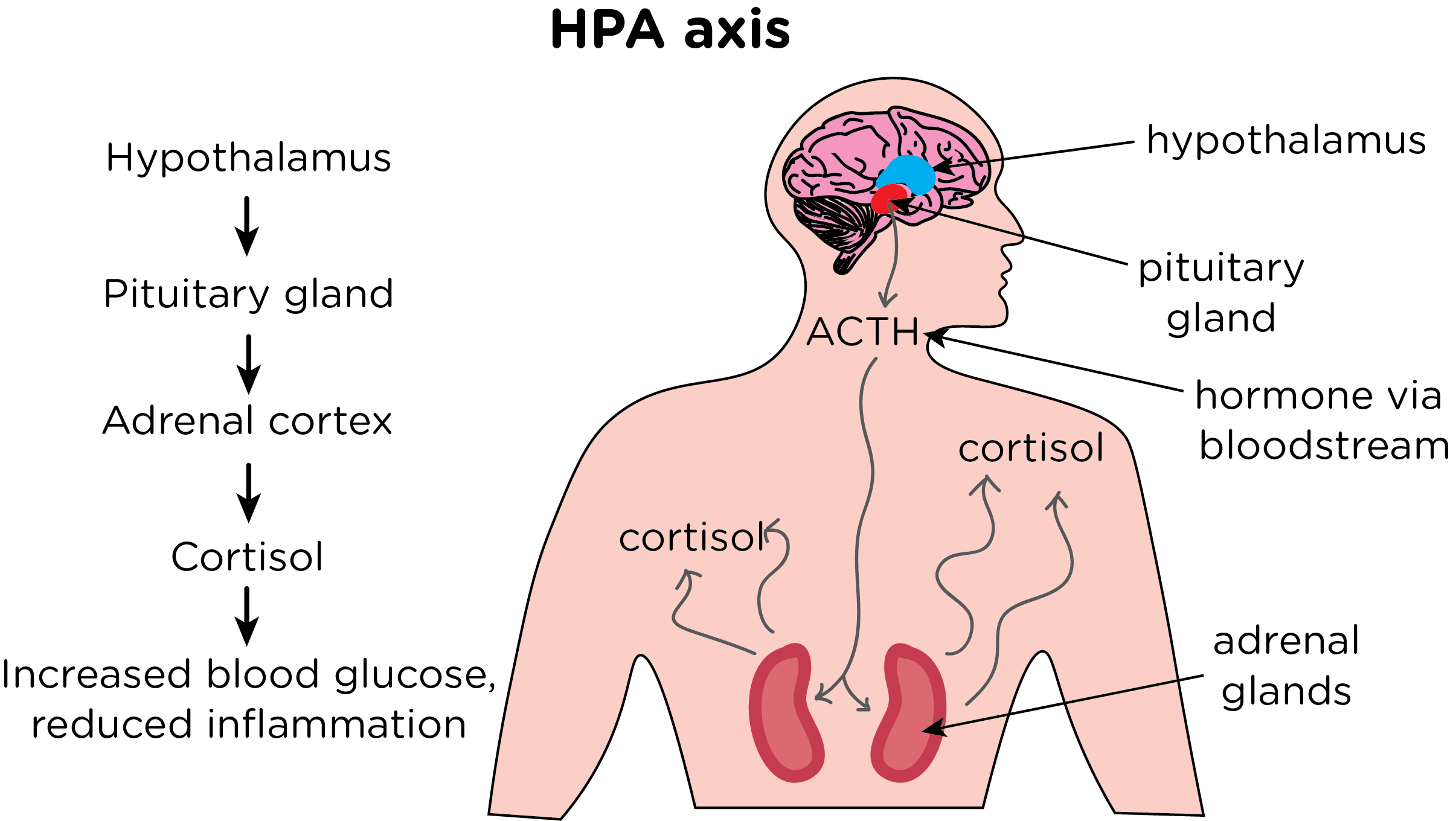
- The continuous release of cortisol from the hypothalamic-pituitary-adrenal (HPA) axis leads to immunosuppression.This can be either directly or indirectly by affecting other life factors which increase the risk of falling ill.
- Research into the reduction of natural killer cells anti killer cells in blood samples of medical students during exams compared to a month before their exams showed that students were more likely to get ill during the exam period due to increased stress.
- 👥 Wilbert-Lampen (2008) reported a 2.66 increase in the likelihood of suffering from an illness during the 2006 World Cup. Due to the stress on their bodies of performing in a world championship they were more likely to be subject to a myocardial infraction. Chronic stress may therefore be considered a more serious risk in the development of a myocardial infarction than obesity.
- Acute stresses could have a positive effect on health compared to chronic stresses. For example, some research has found that exposing rats to an acute stressor benefited the immune functioning of rats, meaning that the stress had an immunoenhancing effect. Hence, not all stress can be generalised to be bad for our health.
Unlock The role of stress in illness
Subscribe to SnapRevise+ to get immediate access to the rest of this resource.
Premium accounts get immediate access to this resource.