

Topic Summaries
Structure and functions of neurons
A-Level
>
Psychology
>
AQA
>
A-Level Psychology Topic Summaries
>
Biopsychology
>
Structure and functions of neurons
Social influence
Memory
Attachment
Approaches in psychology
Biopsychology
Clinical psychology and mental health
Research methods
Issues and debates
Relationships
Gender
Cognition and development
Schizophrenia
Stress
Eating behaviour
Aggression
Forensic psychology
Social influence
Memory
Attachment
Approaches in psychology
Biopsychology
Clinical psychology and mental health
Research methods
Issues and debates
Relationships
Gender
Cognition and development
Schizophrenia
Stress
Eating behaviour
Aggression
Forensic psychology
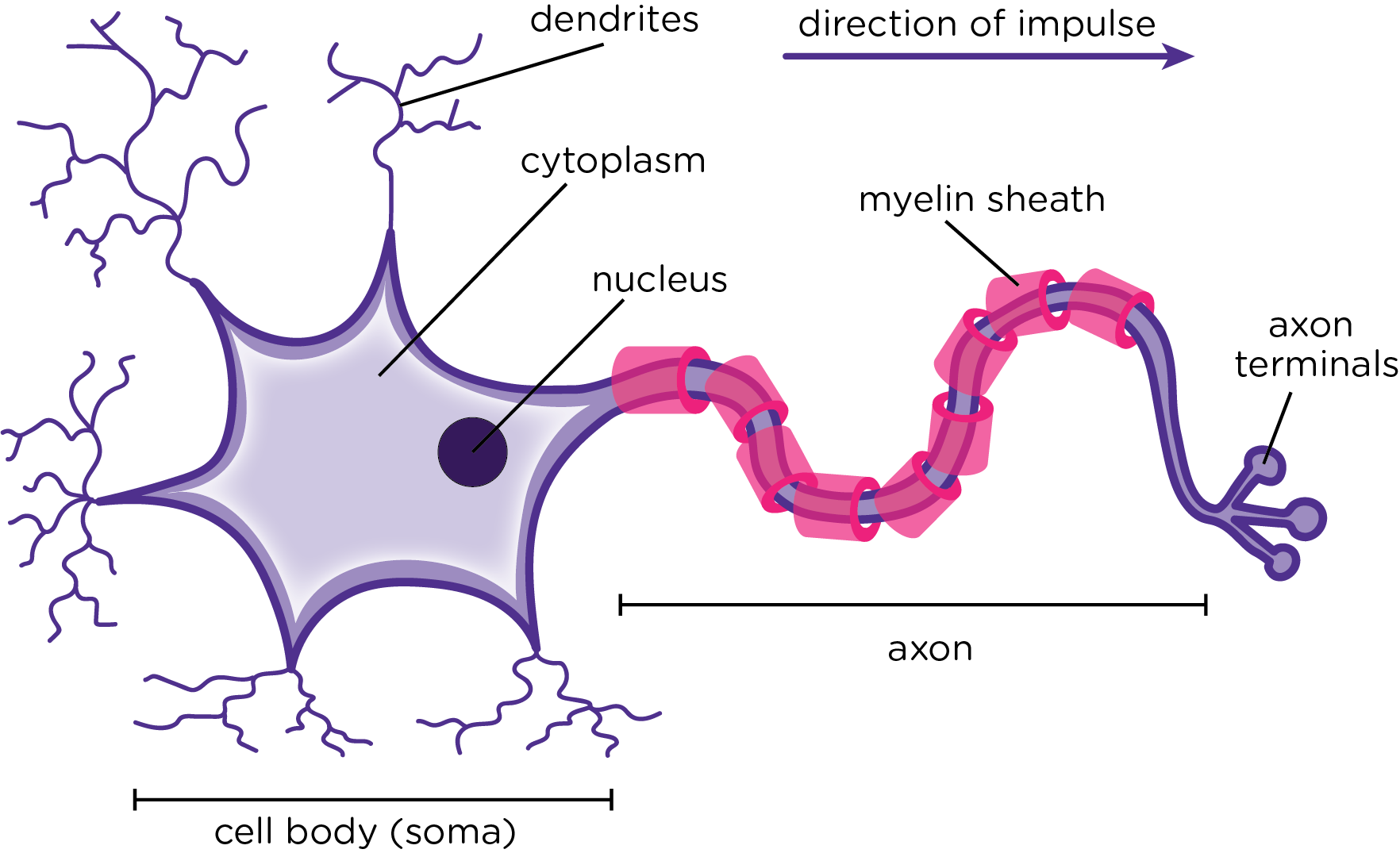
- There are billions of nerve cells called neurons that make up the nervous system. They communicate with one another by using electrical and chemical signals.
- The structure of a neuron:
- Cell membrane: the wall of the cell.
- Dendrites: carry nerve impulses from neighbouring neurons towards the cell body.
- Cell body: contains the genetic material of the cell.
- Axon: plays a major role in communication between neurons. It carries impulses away from the cell body down the neuron. It’s covered in a fatty layer called the myelin sheath that speeds up electrical transmission and protects the axon.
- Terminal buttons: communicates with the next neurone in the chain across a synapse.
- Three types of neuron:
- Sensory neuron: sends information from the senses (ANS) through to the brain (CNS). Receptors are found in eyes, mouth, ears, and skin. They have long dendrites and short axons.
- Relay neuron: connect sensory neurons to motor neurons or other relay neurons via the CNS. They analyse sensations from the neurons and decide how to respond. They have short dendrites and short axons.
- Motor neurons: send information via the axons from the brain through to effectors (e.g.muscles or glands). They have long axons and short dendrites.
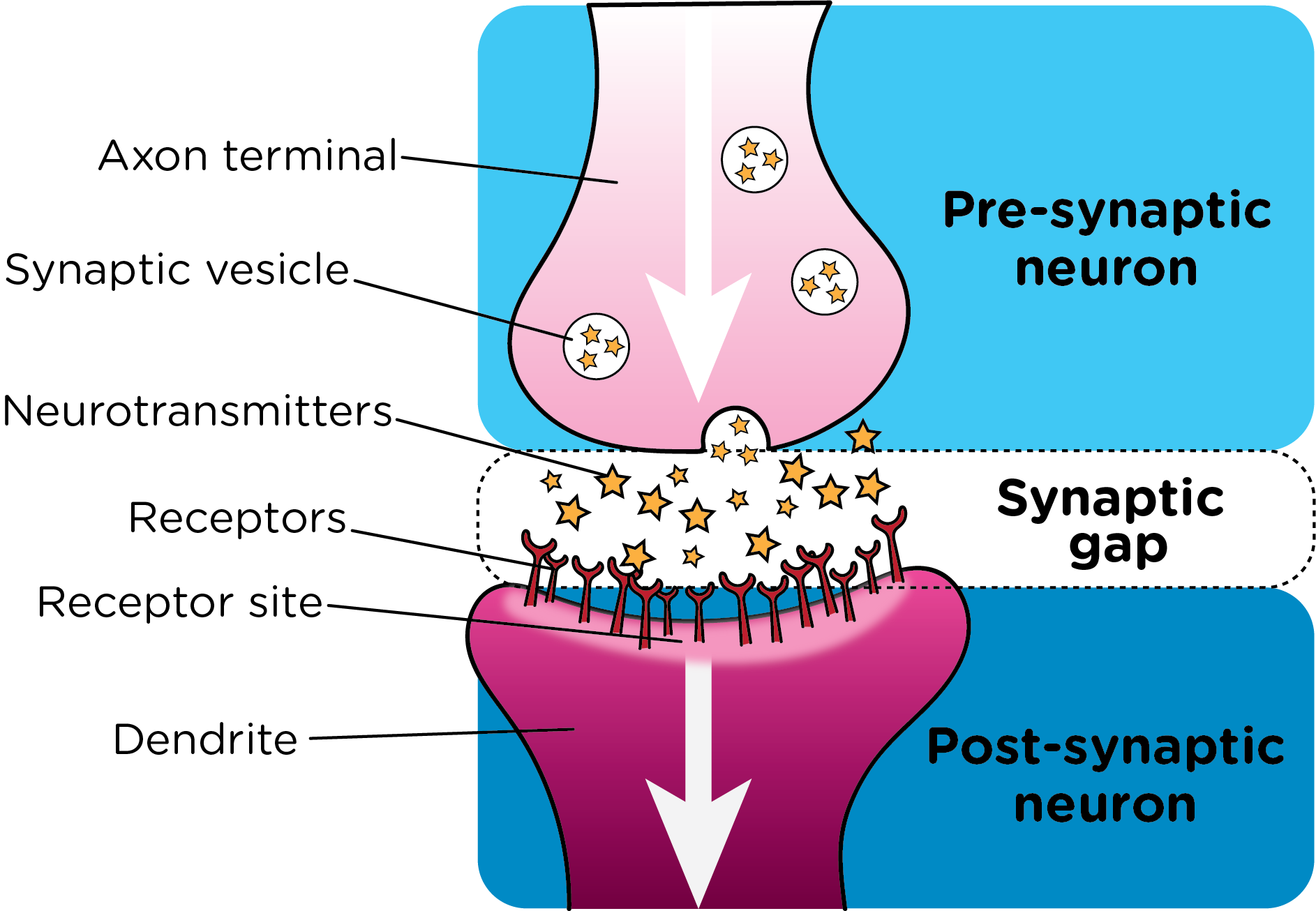
- Synaptic transmission:
- The process of synaptic transmission begins in the pre-synaptic neuron. Action potentials are sent down the axon until they reach the pre-synaptic terminal. Information can only travel in one direction at a synapse. This is because chemical messengers can only bind to specific reception sites.
- Neurotransmitters are stored in vesicles. The action potentials cause the release of neurotransmitters to be released into the pre-synaptic cleft.
- These neurotransmitters then diffuse across the synaptic gap and bind with specific receptor sites that are only available on the post-synaptic neuron.
- Once there’s enough neurotransmitters on the post-synaptic neuron, two things may occur: the next neuron may be ready to fire, depending on whether the neurotransmitter had an exhibitor or inhibitory effect in the neuron, or re-uptake may occur. This is where neurotransmitters are stored in vesicles on the pre-synaptic neuron.
- Excitatory neurotransmitters (e.g.adrenaline) are chemical messengers that makes it more likely that the next neuron will fire an impulse down its axon.
- Inhibitory neurotransmitters (e.g.serotonin) reduce the likelihood that neurons will fire an impulse down an axon.
- Summation occurs when the excitatory and inhibitory effects are added together.
Unlock Structure and functions of neurons
Subscribe to SnapRevise+ to get immediate access to the rest of this resource.
Premium accounts get immediate access to this resource.