

Topic Summaries
The physiology of stress
Social influence
Memory
Attachment
Approaches in psychology
Biopsychology
Clinical psychology and mental health
Research methods
Issues and debates
Relationships
Gender
Cognition and development
Schizophrenia
Stress
Eating behaviour
Aggression
Forensic psychology
Social influence
Memory
Attachment
Approaches in psychology
Biopsychology
Clinical psychology and mental health
Research methods
Issues and debates
Relationships
Gender
Cognition and development
Schizophrenia
Stress
Eating behaviour
Aggression
Forensic psychology
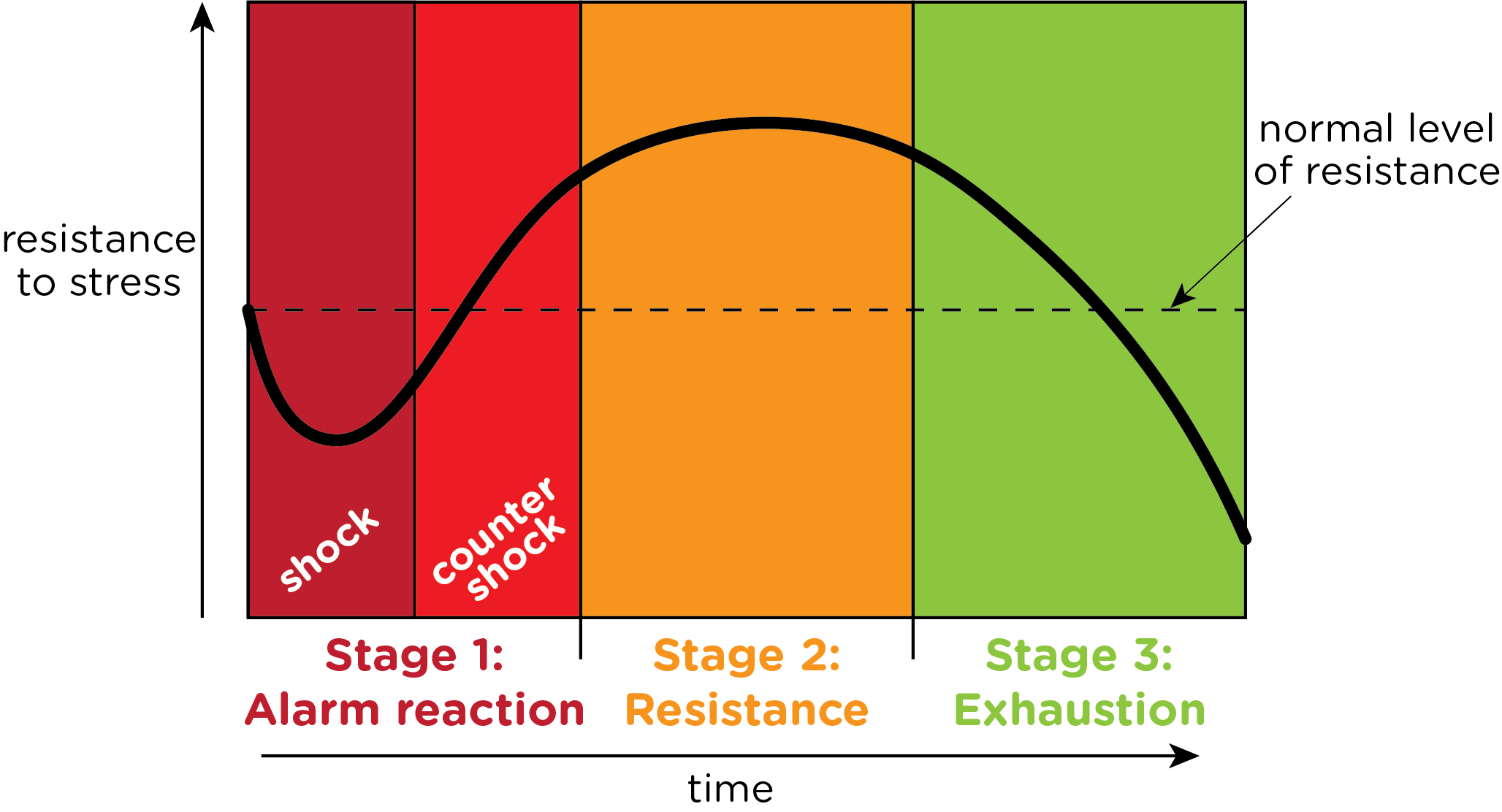
- 👥 Selye (1936): developed the idea of the general adaptation syndrome which explains how stress helps us to adapt new situations through three stages
-
- Alarm: describes immediate physiological response we experience upon seeing a stressor.
- Resistance: in a situation of short-term stress, the body will try to resist the stressor through quickly using its energy resources. When the stressor becomes more permanent, increased activity is triggered in the parasympathetic branch in order to reduce physiological responses increased by the sympathetic branch.
- Exhaustion: is where the original physiological symptoms come back and there is no energy left in the body this results in immunosuppression.
- There are two physiological responses to stress: acute and chronic.
- Acute response: the body perceives an immediate stressor. This information is then passed through sensory neurons to the hypothalamus. The hypothalamus triggers a high level of activity in the sympathetic branch of the ANS. This produces the physiological changes needed to maintain the fight or flight response. When this dresser is gone increased activity in the parasympathetic branch decreases the activity which had been increased.
- Chronic response: this is the activation of the hypothalamic pituitary adrenal system.It produces longer lasting effects compared to the hypothalamus. The release of corticotropin-releasing factor (CRF) results in higher activity of the pituitary gland which triggers the release of stress hormones. Cortisol creates the same fight or flight response but is a longer lasting reaction than the acute response.
- Beta bias: the majority of research into these physiological changes was completed on male mice. The reaction was generalised to females; however, newer research is showing that women have a different response to the fight or flight response. 👥 Taylor (2000) suggests that women have a tendency to ‘tend-and-befriend’ instead of ‘fight-or-flight’ in response to a stressor.
Unlock The physiology of stress
Subscribe to SnapRevise+ to get immediate access to the rest of this resource.
Premium accounts get immediate access to this resource.